


Athletes
Athletes
Find valuable information and updates about O or P visas for those who possesses athletics extraordinary ability, or who has a demonstrated record of extraordinary achievement in athletic competition and has been recognized nationally or internationally for those achievements. Our experienced immigration professionals share their expertise on ever-changing immigration policy and related issues. Be sure to check back often and subscribe for up-to-date information!
Subscribe
Subscribe

If you are an elite athlete, the dream of competing and living in the United States often begins with a temporary visa, like a P-1 or an O-1A, based on an employment contract with a team or a schedule of professional competitions you will participate in. However, if you are able to truly excel and reach the top echelon of competitors in your sport worldwide, you may eventually be able to qualify for an EB-1A employment-based Green Card that grants you lawful permanent residence in the U.S. The EB-1A is highly coveted because it doesn’t require a U.S. employer to sponsor you; you can self-petition based entirely on your own merit. However, the barrier to entry is high. You must either prove a major, one-time achievement (like an Olympic medal or a World Cup title) or satisfy at least three out of ten specific regulatory criteria. If you are a forward-thinking athlete currently in the prime of your career, now is the time to start building your EB-1A playbook. Here is a breakdown of all ten criteria from a professional sports perspective, along with actionable tips to bolster your eligibility for the future. The 10 EB-1A Criteria: An Athlete’s Playbook 1. Nationally or Internationally Recognized Prizes or Awards This criterion looks for evidence of excellence in your sport. For athletes, this means trophies, medals, or individual accolades. What counts: League MVP awards, "Best Newcomer" titles, National Championship medals, or selection to an All-Star team. Regional or local club-level awards generally won't cut it. How to maximize your chances: Never throw away a program booklet, medal certificate, or official league announcement. If you win an award, request a formal letter from the league or federation confirming the criteria for the award, how many athletes competed for it, and why you stood out. You are already striving for excellence in your career, to maximize the impact of these awards on your potential EB-1A eligibility, be prepared to document them as fully as possible. 2. Membership in Elite Associations USCIS looks for memberships in organizations that require outstanding achievements of their members, as judged by recognized national or international experts. What counts: Selection to a National Team, an invitation-only elite training pool, or membership in a prestigious international sports federation with strict performance entry barriers. A basic club membership, or membership in a players’ union for all players in your league is unlikely to move the needle here. How to maximize your chances: Actively pursue national team call-ups or qualify for top-tier athletic federations. Keep copies of the official selection criteria for these organizations to prove that entry is based strictly on elite athletic performance, not just paying a membership fee. 3. Published Material About You in Major Media This involves press coverage detailing your athletic career, your achievements, and your impact on the sport. What counts: Feature articles, profile pieces, and match reports in major media outlets (e.g., ESPN, Sky Sports, major national newspapers, or highly regarded websites that cater to your specific sport). How to maximize your chances: Don't shy away from the press. When journalists ask for interviews, take them. Make sure that video interviews or other video-based features include a written text element as well. Crucially, maintain a digital press portfolio . Save screenshots, URLs, and physical copies of print articles. Track the circulation or web traffic metrics of the publications featuring you to prove they qualify as "major media" - they will need to average at least 3,000 viewers or subscribers per month. 4. Participation as a Judge of the Work of Others This criterion requires you to have evaluated the performance of other athletes or professionals in your field. What counts: Serving as a licensed referee or umpire at high-level competitions, acting as a technical judge at a national tryout, or being invited to sit on a selection panel for a prestigious youth draft combine. How to maximize your chances: As you gain seniority in your sport, accept invitations to judge. Offer to serve as a panelist or evaluator for academy tryouts, state tournaments, or specialized sports combines. Ensure your participation is documented with official invitations and judging schedules. 5. Original Contributions of Major Significance to the Sport This means you have introduced something to your sport that has shifted the way the game is played, trained, or analyzed. What counts: Developing a brand-new training methodology or tactical system that is widely adopted by other clubs, setting a long-standing national or international record, or introducing a new technique to your sport such as a new grappling hold in combat sports or a new putting technique in golf. How to maximize your chances: If you innovate a specific technique or coaching program, document its widespread impact. Secure testimonial letters from independent coaches, sporting directors, and analysts testifying to how your unique contribution has materially advanced the sport. 6. Authorship of Scholarly Articles This requires writing deeply technical or academic pieces for major professional or trade publications. What counts: Publishing tactical breakdowns in recognized coaching journals, writing a column for a sports science publication, or authoring an authoritative textbook on modern athletic training. How to maximize your chances: Use the off-season or injury downtime to co-author articles with sports scientists or write deep-dive tactical pieces for established athletic journals or coaching magazines. The experience and insight of an elite athlete is a valuable academic resource; you don’t need to be an accomplished scholar yourself to contribute to academic work. 7. Display of Work at Artistic Exhibitions or Showcases While primarily designed for painters, sculptors, and actors, this can occasionally be adapted for athletes under very specific circumstances. What counts: Having your athletic gear, memorabilia, or historical achievements featured in a major sports museum, or being a primary feature in an athletic showcase with a large audience such as participating in a testimonial match for a retiring superstar, or a skateboarding demo attached to a popular festival. How to maximize your chances: If your athletic career intersects with media, exhibitions, or major historical displays, keep records of the venue’s prestige, attendance numbers, and promotional materials. 8. Performing in a Leading or Critical Role for Distinguished Organizations You must prove that you played a vital part in the success of a team or organization with an eminent reputation. What counts: Serving as the team captain, being the star player/top scorer who led a top-tier club to a championship, or acting as the foundational head coach of a highly reputable academy. This could also apply to leading your boxing or MMA gym to a tournament title, your motorsport team to a season trophy, or contributing to your country’s success in an international competition. How to maximize your chances: Leadership matters. Strive for roles like captaincy or leading tactical positions. Keep records of statistics that indicate your impact on your team or group’s success. When you leave a club or team, secure a letter from the head coach, general manager, or sporting director detailing exactly how your specific presence and leadership directly caused the organization's success or ranking surge. 9. High Salary or Significantly High Remuneration This requires proving that your compensation is substantially higher than what the average athlete in your sport and country earns. What counts: Playing contracts, performance bonuses, endorsement deals, and prize money that place you in the top tier of earners in your league or nation. How to maximize your chances: Keep meticulous financial records. Save all player contracts, prize money receipts, and tax returns. Work with your immigration attorney to gather objective labor data (like national statistics or league averages) to clearly demonstrate that your income dwarfs the baseline average for your profession. 10. Commercial Successes in the Performing Arts For athletes, this criterion is increasingly satisfied through the modern commercialization of sports, specifically focusing on box office draws and merchandise. What counts: Major pay-per-view (PPV) draws in combat sports or extreme sports, ticket sales or attendance spikes directly attributed to your presence, or substantial jersey/merchandise sales carrying your name. How to maximize your chances: Work closely with your agency, club, or promotion to track your commercial impact. Request data regarding streaming viewership peaks during your matches, box office revenue for events you headlined, or official merchandise sales reports. As with each criteria, the more objective support materials you can provide, the stronger your argument becomes. Summary: Building Your EB-1A Timeline The EB-1A Green Card requires extraordinary ability by its very name; planning and preparation alone cannot manifest eligibility if you are not an outstanding athlete in your chosen sport. But for those high achieving athletes who may wish to pursue this desirable pathway to lawful permanent residency, being proactive early in your career can make all the difference. By understanding these criteria today, you can make intentional career choices that pay off down the road. Treat your visa strategy like your training regimen: consistency, documentation, and aiming for the highest platforms will ultimately secure your win. If you think you may qualify for an EB-1A visa on the basis of your athletic talent, please contact our office and we would be happy to help guide you through this complex but rewarding process.

Navigating the immigration landscape as a professional athlete can feel as demanding as a championship final, but understanding the P-1A visa can help you to plan ahead and successfully petition USCIS when the time comes to apply. For individual athletes like surfers, Rodeo cowboys, or Brazilian Jiu-Jitsu fighters, the P-1A serves as the primary gateway to competing in the United States. While it is often compared to the O-1 visa, the P-1A has a distinct threshold that is more easily accessible than the O-1; rather than proving "extraordinary ability," you must demonstrate "international recognition". This means your achievements must be renowned or leading in more than one country, showcasing a level of skill that is substantially above the ordinary. For those competing in individual sports, the spotlight is entirely on your personal accolades and standing rather than a team or league’s reputation as in the case of a team sport athlete. You must show that you are personally well-known within your sport across multiple countries, and that the U.S. events you intend to enter typically draw other internationally recognized participants. One of the most significant advantages for the solo competitor is the duration of stay, as individual athletes can often secure a P-1 visa for an initial period of up to five years, which can eventually be extended to a total of ten. This stands in stark contrast to team athletes, who are generally limited to the duration of a specific season or contract with a team. If you are looking to be proactive about your future eligibility, you should treat your career milestones as a collection of evidence for the "Two-Out-of-Seven" rule used by USCIS. To qualify, you must provide evidence satisfying at least two of the following seven criteria: Evidence of having participated to a significant extent in a prior season with a major U.S. sports league. Evidence of participation in an international competition with a national team. Evidence of having participated to a significant extent in a prior season for a U.S. college or university in intercollegiate competition. A written statement from an official of a major U.S. sports league or the governing body of the sport detailing your international recognition. A written statement from a member of the sports media or a recognized expert. Evidence that you or your team is ranked, if the sport has international rankings. Evidence that you or your team has received a significant honor or award in the sport. Building your resume with these specific benchmarks in mind is essential. Here are some suggestions to help an individual sport athlete to meet these criteria and successfully qualify for a P-1A visa: First, you should actively seek opportunities to represent your national team or strive for high international rankings , as these are concrete proof of your standing. If you are working with an immigration attorney, make sure they have a clear understanding of your sport, how its governing body determines rankings, and the significance of your accomplishments- successfully showing USCIS why your rankings or results indicate you are performing at an elite and internationally recognized level is key to a successful outcome. Beyond the trophies, your professional network plays a crucial role ; cultivating relationships with recognized experts or sports media members who can provide written statements will significantly strengthen your future petition. Major media articles that discuss your accomplishments or explain the significance of competitions or rankings you feature in, can also have a strong positive impact on your case. As you prepare, remember that every petition also requires a formal consultation letter from an appropriate labor organization , if one exists that covers your sport. A good immigration attorney will help you to identify the appropriate labor organization and engage with them on your behalf to secure the consultation letter you need. Generally, they will want to see the same evidence that USCIS will be evaluating, and they may need some time to review your petition prior to issuing you a consultation letter. Finally, you will also need a written contract with an employer or agent within the United States, and a detailed itinerary of the events where you will perform . Your immigration attorney can also help you to structure your contract with your agent or employer, and guide you in creating an itinerary based on the events or competitions you will participate in. While every individual sport is different, USCIS will want to see that you have set up a structure that will pay you a living wage to perform your sport, and that you have planned out an itinerary of competitions or events in sufficient detail that covers the entire period of time for which you are requesting the P-1A visa. At Santos Lloyd Law Firm, P.C., we are experienced in helping talented individuals who are accomplished in many different sports to continue their careers here in the United States. If you are such an athlete interested in competing here, please contact us, and we will be happy to discuss your case.

Once you have connected with a college program, have been admitted to the school, and deemed eligible to compete athletically, you will need to secure an F-1 student visa in order to actually attend your new college and begin your time as a student athlete. The first step in the visa process is to receive your Form I-2
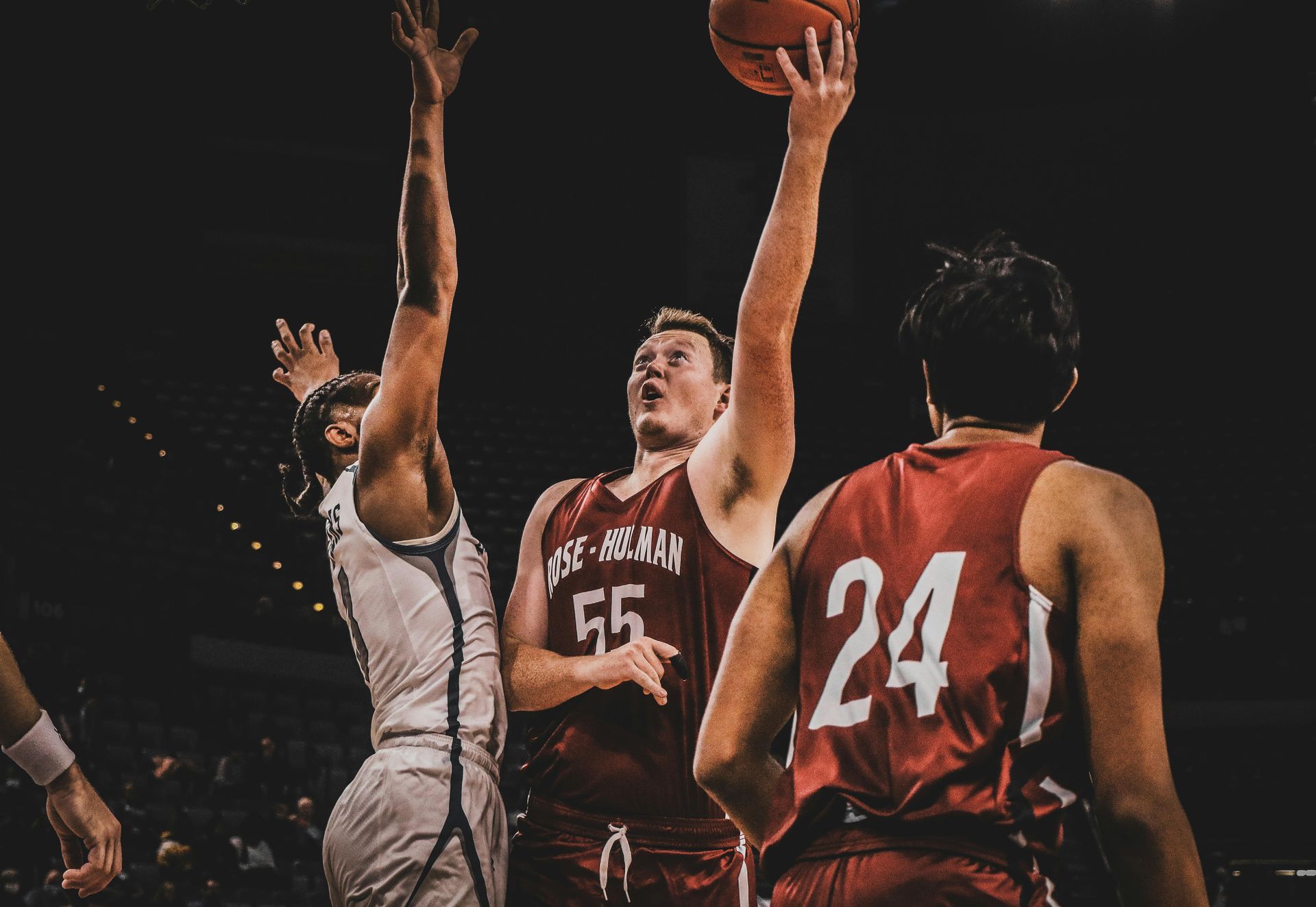
For many talented athletes around the world, U.S. college athletics represent a remarkable opportunity to combine elite athletic competition with higher education. In sports such as basketball, soccer, track and field, and tennis, among others, hundreds of colleges and universities across the United States offer struct

The United States has long been a destination for the world’s most talented athletes—not only to compete at the highest level, but to access world-class training, coaching opportunities, and long-term career prospects. Whether on the field, in the ring, or across the chessboard, athletes from across the globe are finding immigration pathways that allow them to pursue their athletic and professional goals in the U.S. U.S. immigration law offers several visa and green card options designed specifically for individuals with extraordinary athletic talent. These include the P-1A visa for internationally recognized athletes, the O-1A visa for individuals of extraordinary ability, and the EB-1A immigrant petition, which can lead to permanent residency and ultimately, U.S. citizenship. The P-1A visa is commonly used by professional athletes coming to the U.S. to compete in a specific event or season. This applies not only to individual athletes but also to members of teams or clubs recognized internationally. It is widely used by soccer players, basketball players, MMA fighters, Brazilian Jiu-Jitsu competitors, and even elite chess players. Athletes must demonstrate a high level of international recognition and a record of performance in their sport. The O-1A visa is a strong option for coaches who demonstrate extraordinary ability, typically evidenced by championship titles, sustained winning records, or recognition as integral to their team’s success. To qualify, a coach must establish that their expertise places them among the small percentage of top professionals in their field. For athletes seeking permanent status in the U.S., the EB-1A immigrant petition —often referred to as the “extraordinary ability green card”—provides a direct path to lawful permanent residency. It requires clear documentation that the individual is among the very best in their sport and has achieved sustained national or international success. Unlike other green card categories, the EB-1A does not require employer sponsorship and can be self-petitioned. This has become a common path for MMA world champions, BJJ black belt medalists, Olympic athletes, and chess grandmasters—many of whom now represent the U.S. at the highest levels of international competition. It’s important to note that U.S. immigration law defines “athlete” broadly. Whether you are a professional football player in Europe, a sprinter from the Caribbean, a judoka, a gymnast, or a grandmaster in chess, your achievements may qualify under these categories if they are properly documented and presented. The key is a consistent record of excellence and recognition in your sport on a national or international scale. Our office specializes in these types of immigration matters. Whether you are an individual athlete looking to relocate or an organization seeking to bring international talent to your roster, we offer tailored legal strategies to support your goals. If you are exploring options to compete, train, or build your future in the U.S., we’re here to help you take the next step.

If you are planning on filing an O1B visa based on your extraordinary ability, you may need to provide some reference letters as part of the evidence for your application.
You can use letters for various requirements. One specific requirement for the O1B that you will definitely need letters for is the requirement: Evidence the beneficiary has received significant recognition for achievements from organizations, critics, government agencies, or other recognized experts in the field in which the alien is engaged. Such testimonials must be in a form which clearly indicates the author’s authority, expertise, and knowledge of the alien’s achievement. The letters should come from individuals who work within the same field and explain their own background and accomplishments within that field. The individual should also be familiar with the applicant’s work and be able to attest to that person’s accomplishments within the specified field. Letters from individuals without experience within the same field as the a

Several of our clients seeking the EB-1A visa are extraordinary in their field - whether it be in cinematography, engineering, marketing, journalism, art directors, athletes, and more. What makes EB-1A cases so extraordinary is that USCIS requires the applicant to demonstrate they meet at least 3 of 10 criteria as required by USCIS. For candidates who are among the top and are able to demonstrate their extraordinary ability in their given field, this may be an ideal option for you to pursue as there is a pathway to a green card.

When applying for an O-1 visa USCIS requires that a written advisory opinion from a peer group (including labor organizations) or a person with expertise in the beneficiary’s area of ability be provided as part of the application.

An athlete visa (P1-A) allows you to come to and stay in the United States to participate in sports events. You don't necessarily need a P1-A visa to compete in most circumstances. However, if you are serious about your career and the United States plays a big role in your sport, then you should definitely consider getting a P1-A visa. Since the B1 or B2 visas (the business/tourist visas) do not allow for stays over six months and can get tricky to be renewed, that can end up causing more harm than good for your career.

If you are in the U.S. and you decide to change your status from your current visa to an O visa you must file, the proper forms and all the evidence for the requirements and the application along with the fees.
Most Recent Posts
Most Recent Posts

On September 14, 2026, the U.S. District Court for the District of Massachusetts issued a nationwide preliminary injunction in Presidents' Alliance on Higher Education and Immigration v. U.S. Department of Homeland Security , halting the implementation of the Department of Homeland Security (DHS) final rule that was scheduled to eliminate “duration of status” (D/S) on September 15, 2026. As a result of this nationwide order, DHS is blocked from enforcing fixed periods of admission for F-1 students, J-1 exchange visitors, and I media representatives while the litigation moves forward. Because the current “duration of status” framework remains in full effect, F, J, and I visa holders are not required to file Form I-539 extension of stay applications to remain in valid status beyond program end dates at this time. Furthermore, restrictions on academic transfers, constraints on enrolling in second programs at the same degree level, 240-day caps on continued employment while extensions are pending, and shortened grace periods do not apply during the injunction. F-1 nonimmigrants retain the full 60-day post-completion grace period, and J-1 holders maintain their 30-day grace period. However, please note that this preliminary injunction is not a final ruling invalidating the rule , and a status conference is scheduled for October 2, 2026, to determine next steps in the litigation. Immediate Practice Tips: Inspect I-94 Travel Records Upon Reentry: F, J, and I visa holders currently admitted under D/S retain their status and should continue to be readmitted under D/S following international travel until the injunction is lifted. However, because the I-94 record controls legal stay, travelers must inspect their CBP-issued Form I-94 immediately upon reentry to confirm the "Admit Until Date" states "D/S" rather than a specific expiration date. If a specific date is mistakenly recorded, contact a local CPB Deferred Inspection Site. Notify HR and Review Workplace Compliance: Employers sponsoring F-1 or J-1 employees should inform HR and hiring managers that the September 15 fixed-period rule is postponed and standard D/S rules govern. This development does not alter standard filing windows or Form I-9 verification procedures for post-completion OPT or STEM OPT extensions. Maintain Operational Readiness and Defer Unnecessary Filings: Visa holders and employers should defer travel or filing strategy decisions made solely in anticipation of the fixed-admission rule. Because DHS may appeal or the court could alter the timeline on short notice, institutions and visa holders should maintain readiness to adjust plans if implementation resumes. There are many evolving components to this litigation. If you are an F-1, J-1, or I visa holder, sponsoring institution, or employer, you should proactively coordinate with your international student office and legal counsel to protect your status and monitor upcoming court proceedings.

The Department of Homeland Security (DHS) published its final rule eliminating the longstanding "duration of status" (D/S) policy for F, J, and I visa holders, replacing it with a fixed period of admission effective September 15, 2026. This rule requires that those who need additional time to complete their programs must file Form I-539 with USCIS or travel abroad and seek to reenter to extend their authorized period of stay. F and J visa holders present in the U.S. and in valid status on September 15, 2026, will be allowed to remain in the United States until the Program End Date listed on their current Form I-20 (for F-1s) or Form DS-2019 (for J-1s), up to a maximum of four years (until September 15, 2030) plus a 60-day grace period for F-1s and a 30-day grace period for J-1s, without filing an Extension of Status request with USCIS. However, this safety net only applies while staying in the U.S.; international travel and subsequent reentry after September 15, 2026 will result in readmission under the new rule with an I-94 that expires on the Program End Date or Employment Authorization Document (EAD) expiration, but no later than four-years after their date of re-entry. Additionally, once re-admitted under the new rules, F-1s will only receive a 30-day grace period. Immediate Practice Tips: Any F-1 or J-1 nonimmigrant currently in the U.S. who plans to change programs, start a new degree level, or needs more time to complete their studies must work with their school or program sponsor to update their SEVIS record and receive an extended Form I-20 or DS-2019 before September 15, 2026. Eligible F-1 students should submit their post-completion OPT or STEM OPT work authorization applications (Form I-765) before September 15, 2026, to secure their status and drastically reduce the likelihood of needing a Form I-539 extension application. Any F-1 student who is eligible to apply for OPT or STEM OPT before March 18, 2027, should do so as soon as they are eligible to file their Form I-765. Since F-1s can file OPT applications up to 90 days in advance of graduation, F-1 students graduating before June 15,2027, should be able to file their OPT applications before March 18, 2027, and should do so to avoid also having to file Form I-539 to extend their stay. Thus, most F-1 students graduating in December 2026 and May/June 2027 should be able to take advantage of the transition rule’s delay in having to file Form I-539 applications and should only need to file Form I-765 to apply for OPT. Incoming F-1 and J-1 students who can enter the United States before the September 15, 2026 effective date (within the permissible 30-day window prior to their program start) should do so to benefit from the transition rules, including the full 60-day F-1 grace period and deferred extension requirements. Students (F-1 and J-1) who are planning international travel should return before the effective date if possible to preserve their transition benefits. There are many parts of the rule that are not discussed here. If you are currently an F-1 or J-1 visa holder, you should proactively coordinate with your institutions and international office to protect your status and stay informed.

U.S. Citizenship and Immigration Services (USCIS) has released updated policy guidance detailing how officers will evaluate "public charge" inadmissibility for individuals applying for green cards through adjustment of status. This update follows a Department of Homeland Security (DHS) final rule that rescinds the 2022 public charge regulations. The new policy takes effect on September 18, 2026 , and applies to all green card applications (Form I-485) postmarked or submitted on or after that date. Who Is Subject to the Public Charge Rule? Most family-based and employment-based green card applicants will be subject to the public charge ground of inadmissibility. This includes spouses, children, and parents of U.S. citizens or legal permanent residents, as well as most employment visa preference categories, investors, and diversity visa applicants. Certain categories remain explicitly exempt under immigration law. These include: Asylees and refugees Victims of human trafficking (T visa) or crime (U visa) Violence Against Women Act (VAWA) self-petitioners Special Immigrant Juveniles Temporary Protected Status (TPS) applicants Certain military-related applicants and other designated humanitarian groups How USCIS Will Make Determinations USCIS officers will evaluate whether an applicant is likely to become a public charge by reviewing the totality of their circumstances on a case-by-case basis. Key factors include: Five Statutory Factors: Age, health, family status, assets/financial resources, and education or skills. Affidavit of Support: Submission of Form I-864 executed by a sponsor. Use of Public Benefits: USCIS will look at means-tested public benefits, such as cash assistance for income maintenance, housing assistance, food stamps (SNAP), or college financial aid. Note on timing: For benefits received before September 18, 2026, USCIS will only consider public cash assistance for income maintenance and long-term institutionalization at government expense. For benefits received on or after September 18, 2026, the broader consideration of all listed means-tested benefits will apply. Public Charge Bonds If an officer determines that an applicant is inadmissible solely on public charge grounds, USCIS may issue a Notice of Intent to Deny that invites the applicant to post a public charge bond using Form I-945. If an invited applicant successfully posts the required cash or surety bond, USCIS may approve the application for permanent residence. Public charge bonds can only be submitted if explicitly invited by USCIS. Santos Lloyd Law Firm will continue to monitor immigration developments closely and provide updates as further implementation details are released. For more information, please access: https://www.uscis.gov/newsroom/alerts/uscis-issues-guidance-on-making-public-charge-inadmissibility-determination
Santos Lloyd Law Firm, PC
Email: info@santoslloydlaw.com
Phone: (949) 316-0078
Fax: (949) 271-4500
Office Visits by Appointment Only:
4340 Von Karman Ave, #110
Newport Beach, CA 92660
Phone: (949) 316-0078
