


Family
Family
Find valuable information and updates about family immigration and how citizens and permanent residents can sponsor their loved ones to be able to legally live and work in the U.S. with visas, green cards and citizenship. Our experienced immigration professionals share their expertise on ever-changing immigration policy and related issues. Be sure to check back often and subscribe for up-to-date information!
Subscribe
Subscribe

Advance parole is a travel document that permits you to travel outside the United States for temporary travel and return to the United States . Applicants for advance parole need to file Form I-131, Application for Travel Document with U.S. Citizenship and Immigration Services (USCIS) and pay the filing fee. When the application is approved, USCIS issues the applicant a Form I-512L, the advance parole document. The document must be presented to immigration officials to seek admission into the United States after traveling abroad. There are several ways a person can qualify for and obtain advance parole. Applicants for adjustment of status, DACA recipients, and individuals who need to travel for urgent humanitarian reasons are three common types of applicants that can apply for advance parole , however there are more. Applicants for adjustment of status can apply for advance parole when they file their green card application or when the green card application is pending. Adjustment of status applicants must obtain advance parole before traveling outside the United States to avoid an issue with the green card application. Obtaining advance parole through an adjustment of status application does not require an emergency or humanitarian purpose for travel. Note, when you file for advance parole through an adjustment of status application the filing fee for Form I-131 is not required. DACA recipients may also apply for advance parole to travel abroad for humanitarian reasons or for employment or educational purposes only. Humanitarian reasons include medical attention or treatment, visiting a sick relative or for a relative’s funeral services. Educational purposes include studying abroad, academic research and more. Employment purposes include work, training, meetings, interviews, and other specific work assignments. Certain individuals may also apply for advance parole due to an urgent humanitarian reason or to further a significant public benefit. To show that the travel is due to humanitarian, education, or employment reasons, the applicant must provide proof of such to USCIS. As mentioned, these are the three most common ways to obtain advance parole, but they are not the only ways. If you have questions about other ways to obtain advance parole, if you think you qualify for advance parole or have questions about your eligibility, please schedule a consultation with one of our experienced attorneys and we will be more than happy to assist you.

Your conditional resident status is only valid for 2 years. In order to prevent losing lawful status in the United States, you must submit Form I-751, Petition to Remove Conditions on Residence, 90 days before your conditional green card expires. It is critical that you file Form I-751 to remove the conditions in a timely manner because if it is not, you may risk being left without status and the U.S. Department of Homeland Security may issue you a Notice to Appear and place you in removal proceedings before an Immigration Judge.
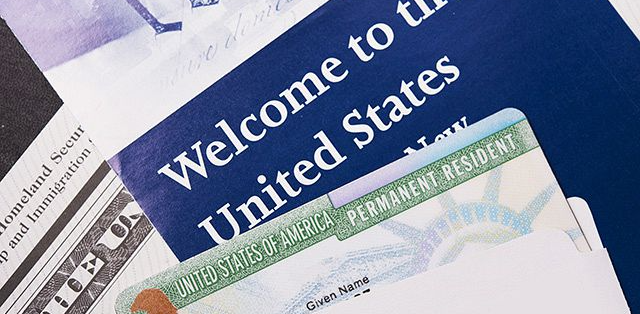
You waited months, maybe even years, and you finally have your Green Card and are a Lawful Permanent Resident of the United States, yay!

Picture this : your significant other finally proposed to you and you are excited, not only for wedding planning but to star t your green card process! One thing to decide before you pop the champagne and start vetting wedding vendors, do I apply for a K1 visa and then start the green card process or do I start the marriage green card process right away? Most people aren’t sure how to answer this question. So when do you apply for a K1 visa versus simply starting the marriage green card process? Keep reading to find out.

Click here to read this article in Portuguese and Spanish If you and your spouse were married for less than 2 years at the time of your I-485 ( Adjustment of Status ) interview and your application was approved, your lawful permanent resident status is conditional and a separate petition to remove those conditions (I-751 petition) must be filed within 90 days of the expiration date on your Green Card. An I-751 petition is a joint petition, filed by the Green Card holder and their spouse, that requests USCIS remove the conditions and issue you permanent resident status and a new 10-year Green Card. However, what if after filing the I-751 petition, you and your spouse decide to get divorced? In such situations, the Green Card holder can request a waiver of the joint petition filing requirement and submit this request with their I-751 petition. Even if you are requesting an I-751 waiver, you must still show that the marriage was originally entered into in good faith. This means that you will still need to prove to USCIS that you entered into the marriage for love and not just to obtain a Green Card. Evidence of good faith can include, but is not limited to, the marriage certificate, joint documents, birth certificates of children born of the marriage, etc. Documentation that can/should be submitted with your I-751 waiver request include copy of your green card, documentation regarding the circumstances surrounding the end of your marriage, evidence that the marriage was entered into in good faith, copy of the divorce decree (or evidence that divorce proceedings have been initiated if not yet final), statement from you regarding the circumstances, etc. USCIS reviews waiver requests on a case-by-case basis. Current USCIS policy guidance indicates that if a waiver request is made and the divorce is not yet final, USCIS should issue a Request for Evidence (RFE) with a response period of up to 87 days. In the RFE, the officer will request that you provide a copy of the final divorce decree and a statement from you officially asking that the I-751 petition be converted to a waiver application (if not already provided), along with any other documents they deem necessary to decide the case. As long as you can provide these documents to USCIS by the response deadline, the officer can amend the I-751 petition indicating that you are eligible for a waiver based on the termination of the marriage and can adjudicate the petition as such without the need to re-file the application. USCIS will then evaluate whether or not the good faith requirement has been met and may schedule the case for an in-person interview. If the application is approved, then you will be issued your 10-year Green Card. If the application is denied, then your case may be referred to immigration court and you may be placed in removal proceedings. I-751 waiver cases are a complicated matter. If you or someone you know find themselves in a situation like the one mentioned above, please contact our experienced immigration attorneys at Santos Lloyd Law Firm for assistance with your case.

But what should you expect at the interview?
In some ways this may feel almost like a job interview, but it isn’t. The purpose of the interview is to verify that you and your spouse have filed a petition based on a bona fide or real marriage. The difference between this and a job interview is that at this interview you and your spouse will be sworn in and anything you answer will be considered testimony. The officer will verify your information on the I-130 Petition for Alien Relative and the I-485 Applicant to Register Permanent Residence updating any information such as address or employer. The officer will also ask questions about your relationship, something that may seem odd to U.S. born citizens.

It is a petition that can be filed by a Lawful Permanent Resident or U.S. Citizen Spouse on behalf of their immigrant spouse to obtain a green card. In order to file the petition, the individuals must be legally married, no specific period of time is required, but the length of the marriage at the time of the interview may affect if a 2 year or 10-year green card is issued if the case is approved.

Under the current American Immigration System, there are three major paths to becoming a Lawful Permanent Resident, popularly known as a " Green Card Holder ." One is: Family Ties . This means that a qualifying family member, such as a spouse, parent or child, sponsors your application. A second path is: Employment Ties. Meaning that your employer sponsors your application. And third is: Humanitarian Reasons. This is the least common of the three paths, and involves getting residence through a humanitarian immigration program, such as asylum or refugee status. This article explores the first path, obtaining a green card based through marriage, and is the story of my personal experience, getting my green card through marriage to my husband.
Most Recent Posts
Most Recent Posts
October begins a new federal fiscal year, but that does not mean every green card applicant moves to the front of the line. The Department of State’s October 2026 Visa Bulletin sets out the visa availability that applicants in family-sponsored and employment-based preference categories need to review this month.

Santos Lloyd Law Firm takes great pride in announcing that Partner Flavia Santos Lloyd has been invited to join the Fellows of the American Bar Foundation. As a highly selective global network, the organization recognizes legal professionals across both the public and private sectors who embody the absolute highest standards of the practice. Admission to this distinguished group highlights Flavia’s outstanding legal career, professional integrity, and deep impact on the legal community. Our team celebrates Flavia on this well-deserved recognition!

On September 14, 2026, the U.S. District Court for the District of Massachusetts issued a nationwide preliminary injunction in Presidents' Alliance on Higher Education and Immigration v. U.S. Department of Homeland Security , halting the implementation of the Department of Homeland Security (DHS) final rule that was scheduled to eliminate “duration of status” (D/S) on September 15, 2026. As a result of this nationwide order, DHS is blocked from enforcing fixed periods of admission for F-1 students, J-1 exchange visitors, and I media representatives while the litigation moves forward. Because the current “duration of status” framework remains in full effect, F, J, and I visa holders are not required to file Form I-539 extension of stay applications to remain in valid status beyond program end dates at this time. Furthermore, restrictions on academic transfers, constraints on enrolling in second programs at the same degree level, 240-day caps on continued employment while extensions are pending, and shortened grace periods do not apply during the injunction. F-1 nonimmigrants retain the full 60-day post-completion grace period, and J-1 holders maintain their 30-day grace period. However, please note that this preliminary injunction is not a final ruling invalidating the rule , and a status conference is scheduled for October 2, 2026, to determine next steps in the litigation. Immediate Practice Tips: Inspect I-94 Travel Records Upon Reentry: F, J, and I visa holders currently admitted under D/S retain their status and should continue to be readmitted under D/S following international travel until the injunction is lifted. However, because the I-94 record controls legal stay, travelers must inspect their CBP-issued Form I-94 immediately upon reentry to confirm the "Admit Until Date" states "D/S" rather than a specific expiration date. If a specific date is mistakenly recorded, contact a local CPB Deferred Inspection Site. Notify HR and Review Workplace Compliance: Employers sponsoring F-1 or J-1 employees should inform HR and hiring managers that the September 15 fixed-period rule is postponed and standard D/S rules govern. This development does not alter standard filing windows or Form I-9 verification procedures for post-completion OPT or STEM OPT extensions. Maintain Operational Readiness and Defer Unnecessary Filings: Visa holders and employers should defer travel or filing strategy decisions made solely in anticipation of the fixed-admission rule. Because DHS may appeal or the court could alter the timeline on short notice, institutions and visa holders should maintain readiness to adjust plans if implementation resumes. There are many evolving components to this litigation. If you are an F-1, J-1, or I visa holder, sponsoring institution, or employer, you should proactively coordinate with your international student office and legal counsel to protect your status and monitor upcoming court proceedings.
Santos Lloyd Law Firm, PC
Email: info@santoslloydlaw.com
Phone: (949) 316-0078
Fax: (949) 271-4500
Office Visits by Appointment Only:
4340 Von Karman Ave, #110
Newport Beach, CA 92660
Phone: (949) 316-0078
