

Demander la nationalité américaine après avoir été un resident permanent legal pendant au moins 5 ans
Denice Flores • October 10, 2024
Click here to read this article in English
Pour pouvoir prétendre à la naturalisation américaine en tant que résident permanent légal depuis au moins cinq ans, vous devez:
- Prouver que vous êtes un résident permanent légal des États-Unis depuis au moins cinq ans ;
- Démontrer que vous avez résidé de manière continue aux États-Unis pendant au moins cinq ans immédiatement avant de déposer votre demande de naturalisation ;
- Démontrer que vous avez été physiquement présent aux États-Unis pendant au moins 30 mois au cours des cinq années précédant immédiatement la demande de naturalisation ; et
- Réussir le test de naturalisation.
Le test de naturalisation comprend un test d'anglais et un test d'éducation civique.
Le demandeur doit montrer qu'il sait lire, écrire et parler un anglais de base. L'agent de l'USCIS chargé de l'entretien demandera au demandeur de lire une phrase en anglais et d'écrire une phrase en anglais. Si le demandeur démontre sa capacité à lire, écrire et parler l'anglais, il réussit cette partie du test.
L'épreuve d'éducation civique est une épreuve orale au cours de laquelle le demandeur doit répondre à des questions sur le gouvernement et l'histoire des États-Unis. L'agent de l'USCIS posera au demandeur jusqu'à 10 questions parmi les 100 questions du test d'éducation civique. Pour réussir cette partie du test, le demandeur doit répondre correctement à au moins 6 questions.
Si le candidat remplit toutes les conditions d'éligibilité et réussit le test de naturalisation, la dernière étape avant la naturalisation est d'assister à la cérémonie de prestation de serment pour devenir un citoyen américain naturalisé.
Si vous avez des questions ou si vous souhaitez obtenir plus d'informations sur votre éligibilité à la naturalisation, veuillez contacter notre bureau pour prendre rendez-vous avec nos avocats expérimentés en droit de l'immigration.
Ce blog n'est pas destiné à fournir des conseils juridiques et rien ici ne doit être interprété comme établissant une relation avocat-client. Veuillez prendre rendez-vous avec un avocat spécialisé en droit de l'immigration avant d'agir sur la base de toute information lue ici.
Denice Flores
This Facebook widget is no longer supported.
Similar Posts
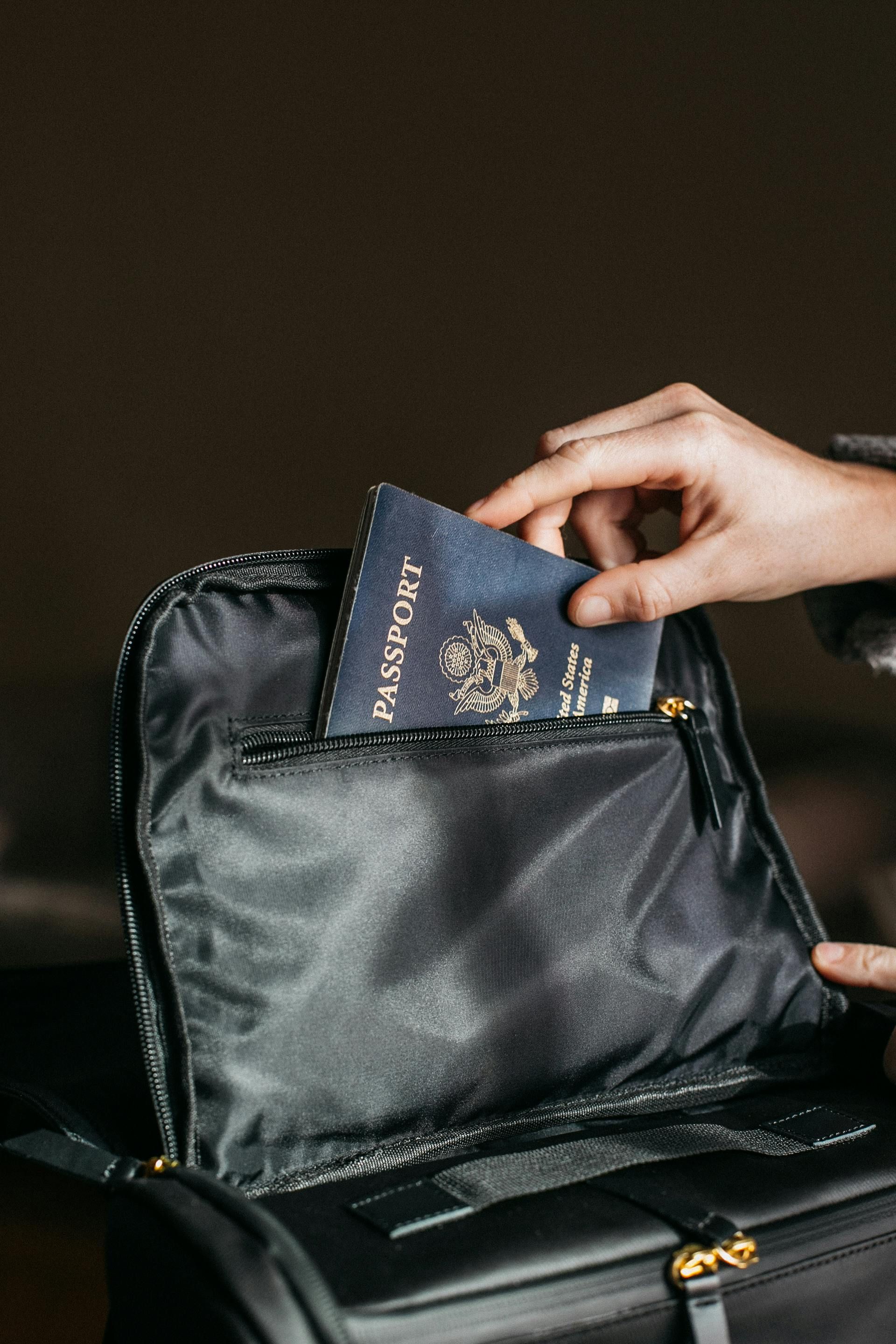
To be eligible for U.S. naturalization based on being a lawful permanent resident for at least five years, you must: Prove you have been a lawful permanent resident of the U.S. for at least five years; Demonstrate continuous residence in the U.S. for at least five years immediately before applying for naturalization; Show you have been physically present in the U.S. for at least 30 months out of the five years immediately before applying for naturalization; and Pass the naturalization test. The naturalization test consists of the English and civics test. The applicant must show his/her ability to read, write, and speak basic English. The interviewing USCIS officer will ask the applicant to read a sentence in English and to write a sentence in English. If the applicant demonstrates his/her ability to read, write, and speak English, the applicant passes this portion of the test. The civics test is an oral test, and the applicant is asked questions about the American government and history. The USCIS officer will ask the applicant up to 10 questions from the list of 100 civics test questions. To pass this portion of the test, the applicant must answer at least 6 questions correctly. If the applicant satisfies all of the eligibility requirements and passes the naturalization test, the last step before naturalizing is to attend the oath ceremony to become a naturalized U.S. citizen. If you have any questions and would like more information about your eligibility for naturalization, please contact our office to schedule a consultation with our experienced immigration attorneys.
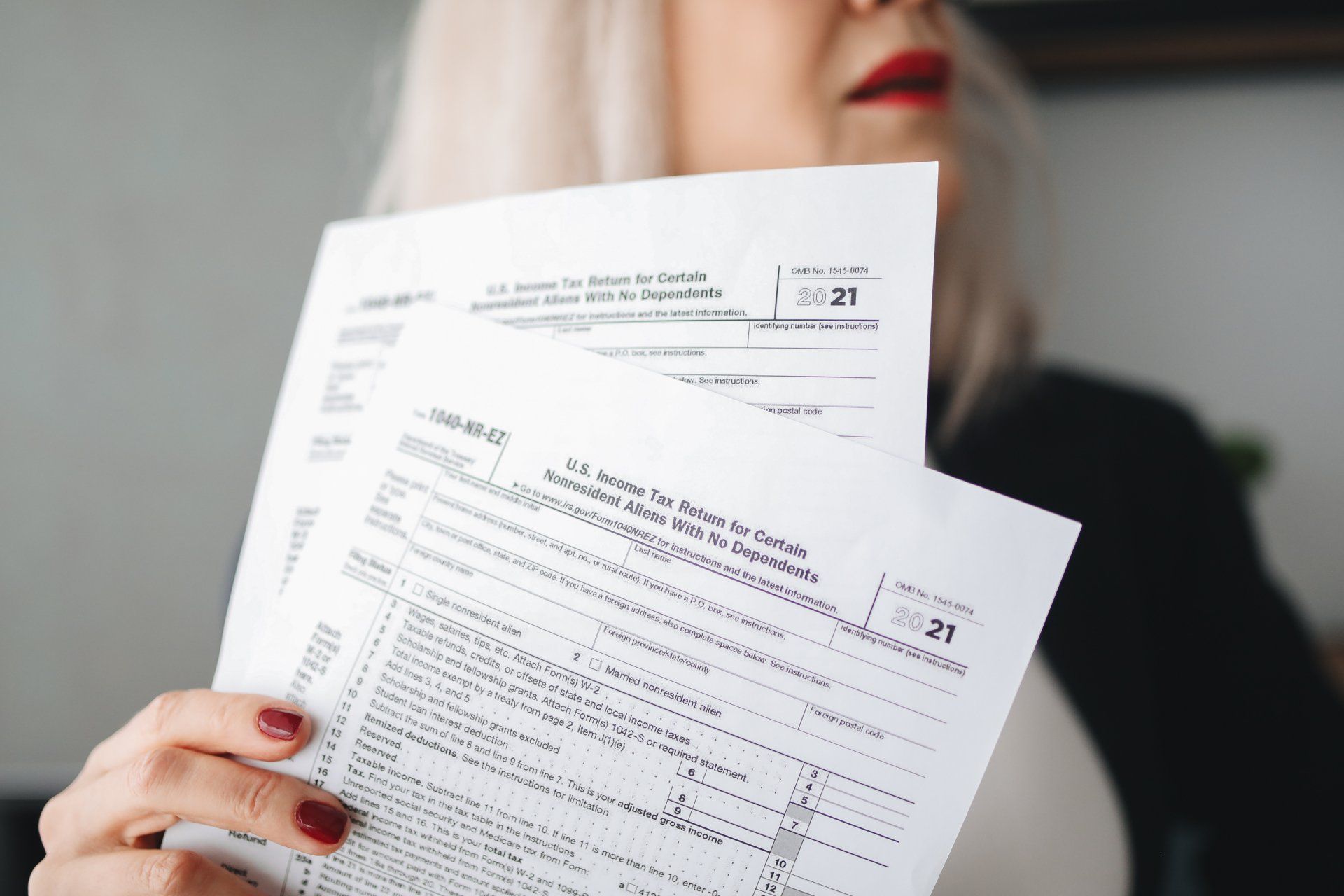
U.S. Citizenship and Immigration Services made changes to the naturalization application and the filing fee which became effective April 1, 2024. The naturalization application, Form N-400, was updated. The new form edition is dated 04/01/2024. As of June 3, 2024, USCIS will only accept the new form edition. The filing fee for Form N-400 also changed. The prior filing fee was $640.00 plus a biometric fee of $85.00, for a total of $725.00. The new filing fee became effective April 1, 2024, so all naturalization applications postmarked April 1, 2024, or later, must include the new appropriate filing fee. The new general fee if you file a paper application is $760.00, and if you file the application online the fee is $710.00.

In the landscape of U.S. immigration law, the pursuit of an employment-based green card can be a significant milestone for foreign nationals aspiring to establish their careers in the United States. Among the various pathways available, self-sponsorship for an employment-based green card stands out as an option that grants individuals the ability to sponsor their own immigration journey, offering a unique opportunity for skilled professionals and entrepreneurs. Traditionally, most employment-based green card categories require an employer to sponsor the foreign national, demonstrating the need for their skills or expertise. However, certain visa categories permit self-sponsorship, allowing individuals to petition for permanent residency without a specific employer's sponsorship. These include: 1. EB-1A Extraordinary Ability: Individuals with extraordinary abilities in the sciences, arts, education, business, or athletics may self-petition for an employment-based green card. They must demonstrate sustained national or international acclaim, providing extensive evidence of their achievements in their field. 2. EB-2 National Interest Waiver (NIW): This category enables individuals whose work is deemed to be in the interest of the United States to self-sponsor. Applicants must demonstrate their work's significance and how it benefits the nation as a whole. 3. EB-5 Immigrant Investor Program: Entrepreneurs investing in a new commercial enterprise that creates jobs for U.S. workers can self-petition for an employment-based green card. They must meet certain investment thresholds and fulfill job creation requirements. While these classifications have the advantage of allowing an individual to self-petition, each of these applications have distinct, stringent requirements to meet. This route can be challenging, requiring substantial evidence and a compelling case to prove extraordinary abilities or qualifications. Additionally, meeting the high standards set by USCIS for self-sponsorship can be demanding, necessitating thorough preparation and documentation. Navigating the complexities of immigration law, especially concerning self-sponsorship, often requires professional legal guidance. Seeking assistance from experienced immigration attorneys or consultants can significantly enhance the chances of a successful self-sponsored green card application, ensuring compliance with the intricate regulations and requirements. If you have any questions about what this means for you, please schedule a consultation with one of our experienced attorneys. We look forward to working with you.
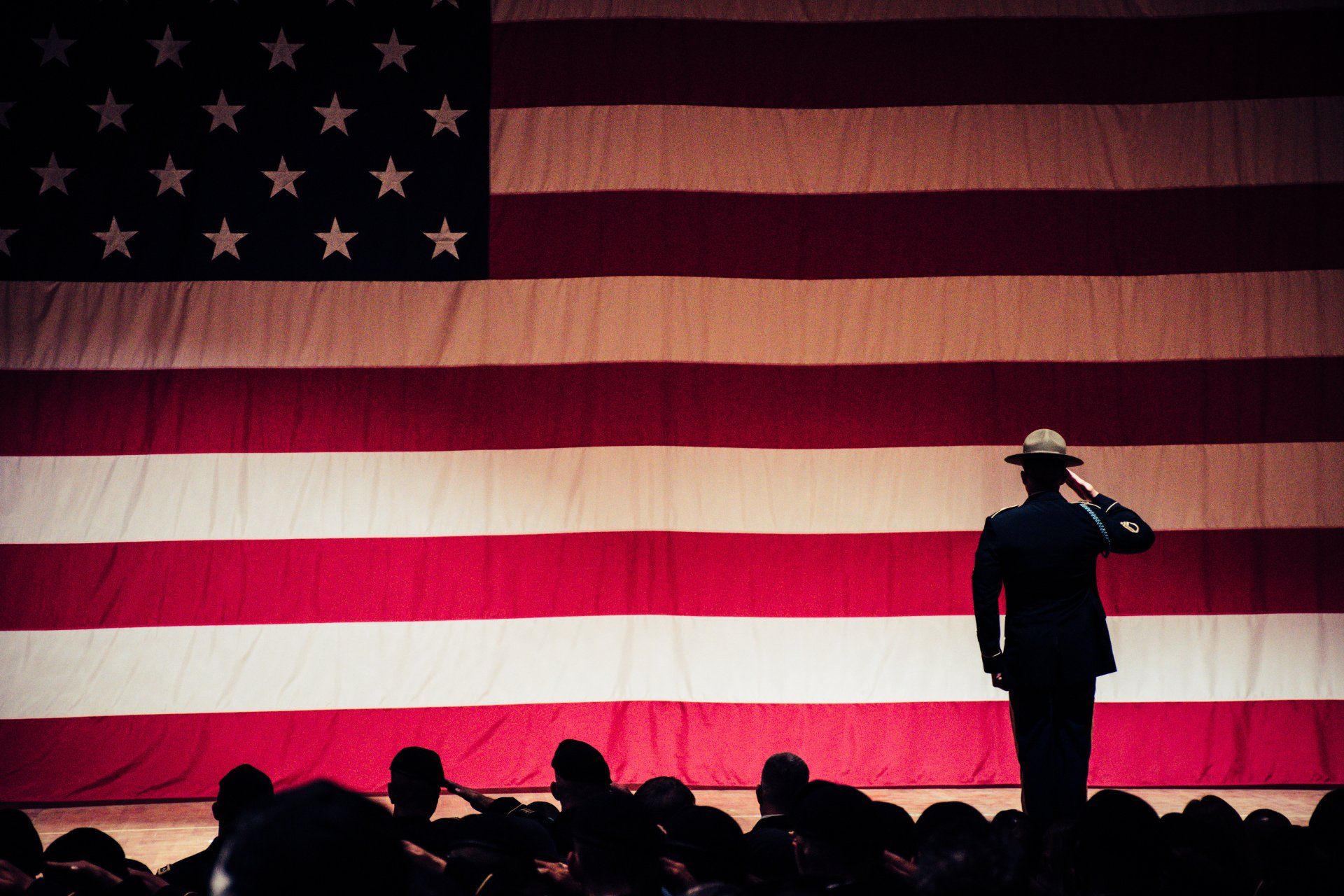
The Military Selective Service Act requires all men living in the United States to register with the Selective Service System within 30 days of turning 18 years old and up to 26 years of age. The Selective Service System (SSS) is used by the U.S. government to draft soldiers into service during times of war. There are a few exceptions to the registration requirement: First, if you hold non-immigrant status until the age of 26, you do not have to register with the SSS. Second, if you enter the U.S. after the age of 26, you do not have to register with the SSS, as the age requirement to register is between 18 and 26. Third, men born after March 29, 1957, and before December 31, 1959, are not required to register. To verify online go to: https://www.sss.gov/verify/ . The information you will need to provide is your last name, social security number, and date of birth. If you find your registration record, download, and print an official Selective Service Registration Acknowledgement Letter from the website and include it with your application. This is sufficient to show that you registered. If you can’t verify your registration because you don’t have a social security number or you didn’t have one when you registered, or you prefer to call, you need to call the SSS at: (888) 655-1825 . Note, failure to register will not automatically lead to the U.S. Citizenship and Immigration Services denying your naturalization application. In fact, even if you did not register and you were required to do so, the USCIS cannot deny your application if you show that you did not know you were required to register, or the failure to register wasn’t intentional. If you have any questions, please schedule a consultation with one of our experienced attorneys and we will be more than happy to assist you.
Santos Lloyd Law Firm takes great pride in announcing that Partner Flavia Santos Lloyd has been invited to join the Fellows of the American Bar Foundation. As a highly selective global network, the organization recognizes legal professionals across both the public and private sectors who embody the absolute highest standards of the practice. Admission to this distinguished group highlights Flavia’s outstanding legal career, professional integrity, and deep impact on the legal community. Our team celebrates Flavia on this well-deserved recognition!

On September 14, 2026, the U.S. District Court for the District of Massachusetts issued a nationwide preliminary injunction in Presidents' Alliance on Higher Education and Immigration v. U.S. Department of Homeland Security , halting the implementation of the Department of Homeland Security (DHS) final rule that was scheduled to eliminate “duration of status” (D/S) on September 15, 2026. As a result of this nationwide order, DHS is blocked from enforcing fixed periods of admission for F-1 students, J-1 exchange visitors, and I media representatives while the litigation moves forward. Because the current “duration of status” framework remains in full effect, F, J, and I visa holders are not required to file Form I-539 extension of stay applications to remain in valid status beyond program end dates at this time. Furthermore, restrictions on academic transfers, constraints on enrolling in second programs at the same degree level, 240-day caps on continued employment while extensions are pending, and shortened grace periods do not apply during the injunction. F-1 nonimmigrants retain the full 60-day post-completion grace period, and J-1 holders maintain their 30-day grace period. However, please note that this preliminary injunction is not a final ruling invalidating the rule , and a status conference is scheduled for October 2, 2026, to determine next steps in the litigation. Immediate Practice Tips: Inspect I-94 Travel Records Upon Reentry: F, J, and I visa holders currently admitted under D/S retain their status and should continue to be readmitted under D/S following international travel until the injunction is lifted. However, because the I-94 record controls legal stay, travelers must inspect their CBP-issued Form I-94 immediately upon reentry to confirm the "Admit Until Date" states "D/S" rather than a specific expiration date. If a specific date is mistakenly recorded, contact a local CPB Deferred Inspection Site. Notify HR and Review Workplace Compliance: Employers sponsoring F-1 or J-1 employees should inform HR and hiring managers that the September 15 fixed-period rule is postponed and standard D/S rules govern. This development does not alter standard filing windows or Form I-9 verification procedures for post-completion OPT or STEM OPT extensions. Maintain Operational Readiness and Defer Unnecessary Filings: Visa holders and employers should defer travel or filing strategy decisions made solely in anticipation of the fixed-admission rule. Because DHS may appeal or the court could alter the timeline on short notice, institutions and visa holders should maintain readiness to adjust plans if implementation resumes. There are many evolving components to this litigation. If you are an F-1, J-1, or I visa holder, sponsoring institution, or employer, you should proactively coordinate with your international student office and legal counsel to protect your status and monitor upcoming court proceedings.

The Department of Homeland Security (DHS) published its final rule eliminating the longstanding "duration of status" (D/S) policy for F, J, and I visa holders, replacing it with a fixed period of admission effective September 15, 2026. This rule requires that those who need additional time to complete their programs must file Form I-539 with USCIS or travel abroad and seek to reenter to extend their authorized period of stay. F and J visa holders present in the U.S. and in valid status on September 15, 2026, will be allowed to remain in the United States until the Program End Date listed on their current Form I-20 (for F-1s) or Form DS-2019 (for J-1s), up to a maximum of four years (until September 15, 2030) plus a 60-day grace period for F-1s and a 30-day grace period for J-1s, without filing an Extension of Status request with USCIS. However, this safety net only applies while staying in the U.S.; international travel and subsequent reentry after September 15, 2026 will result in readmission under the new rule with an I-94 that expires on the Program End Date or Employment Authorization Document (EAD) expiration, but no later than four-years after their date of re-entry. Additionally, once re-admitted under the new rules, F-1s will only receive a 30-day grace period. Immediate Practice Tips: Any F-1 or J-1 nonimmigrant currently in the U.S. who plans to change programs, start a new degree level, or needs more time to complete their studies must work with their school or program sponsor to update their SEVIS record and receive an extended Form I-20 or DS-2019 before September 15, 2026. Eligible F-1 students should submit their post-completion OPT or STEM OPT work authorization applications (Form I-765) before September 15, 2026, to secure their status and drastically reduce the likelihood of needing a Form I-539 extension application. Any F-1 student who is eligible to apply for OPT or STEM OPT before March 18, 2027, should do so as soon as they are eligible to file their Form I-765. Since F-1s can file OPT applications up to 90 days in advance of graduation, F-1 students graduating before June 15,2027, should be able to file their OPT applications before March 18, 2027, and should do so to avoid also having to file Form I-539 to extend their stay. Thus, most F-1 students graduating in December 2026 and May/June 2027 should be able to take advantage of the transition rule’s delay in having to file Form I-539 applications and should only need to file Form I-765 to apply for OPT. Incoming F-1 and J-1 students who can enter the United States before the September 15, 2026 effective date (within the permissible 30-day window prior to their program start) should do so to benefit from the transition rules, including the full 60-day F-1 grace period and deferred extension requirements. Students (F-1 and J-1) who are planning international travel should return before the effective date if possible to preserve their transition benefits. There are many parts of the rule that are not discussed here. If you are currently an F-1 or J-1 visa holder, you should proactively coordinate with your institutions and international office to protect your status and stay informed.
