

¿Los cónyuges E y L requieren autorización de trabajo?
Kyle Huffman • January 6, 2023
Un acuerdo reciente de USCIS ha aclarado el incidente de autorización de trabajo al estado para ciertos cónyuges E y L.
Click here to read this article in Portuguese and English
En años anteriores, los cónyuges de ciertas categorías de visa E y L debían solicitar y recibir un Documento de Autorización de Empleo para poder trabajar en los Estados Unidos. Sin embargo, como resultado de un acuerdo alcanzado por la USCIS en la demanda colectiva Shergill vs. Mayorkas el 10 de noviembre de 2021, la USCIS ahora considera que los cónyuges dependientes E y L están autorizados para trabajar, en relación con su estado.
La USCIS ha emitido una alerta de política
que aclara esta decisión. La guía para los cónyuges H-4 no ha cambiado, pero es posible la extensión automática de la autorización de empleo para aquellos en esta categoría de visa. Para los cónyuges L-2 y E-2, el acuerdo ahora confirma la autorización de empleo relacionada con su estado.
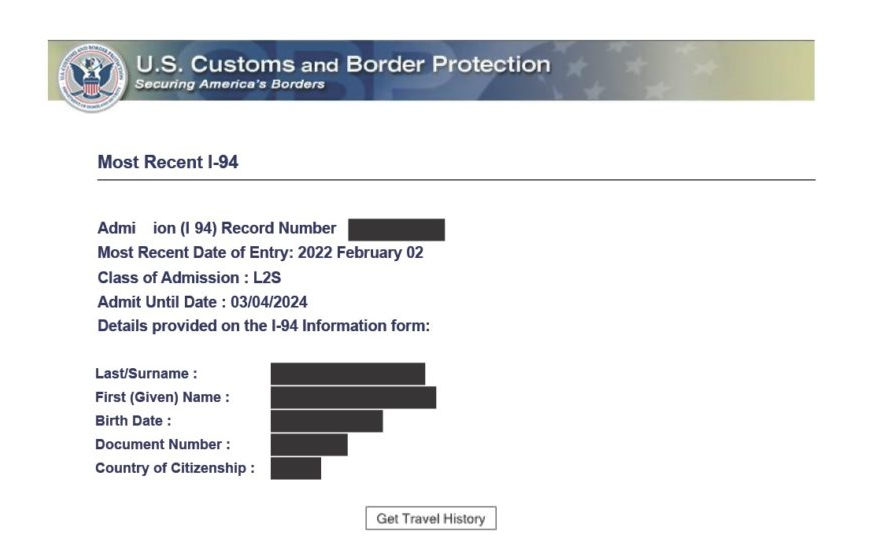
Si es un cónyuge dependiente E, su próxima entrada a los Estados Unidos debería proporcionarle un nuevo formulario I-94 que indica su estado como cónyuge E con la anotación 'S'. Para los cónyuges de comerciantes de tratados E-1, el I-94 ahora debe incluir el estado del cónyuge como 'E-1S', y lo mismo se aplica para los cónyuges E-2 y E-3, cuyos I-94 mostrarán 'E-2S ' y 'E-3S' respectivamente.
Si bien este acuerdo dará como resultado un acceso mucho mayor al empleo para ciertos cónyuges E y L, es importante tener en cuenta que este acuerdo no cubre a los hijos dependientes E y L, quienes no tendrán autorización de empleo de la misma manera que los cónyuges.
Si tiene alguna inquietud sobre lo que esto significa para usted, programe una consulta con uno de nuestros abogados con experiencia en el área.
Esperamos con interés trabajar con usted.
Este blog no pretende constituir una asesoría legal y nada aquí debe interpretarse como el establecimiento de una relación abogado-cliente. Programe una consulta con un abogado de inmigración antes de tomar acción basándose en cualquier información que lea aquí.
This Facebook widget is no longer supported.
Kyle Huffman
Similar Posts

The E-2 Visa is a non-immigrant visa that allows foreign investors from treaty countries to live and work in the United States by starting or purchasing a business. Unlike other visa categories, it does not require a fixed minimum investment amount. Instead, applicants must demonstrate that their investment is substantial and sufficient to ensure the success of their business. The visa is renewable indefinitely as long as the business remains active and meets the necessary criteria, making it an attractive option for entrepreneurs seeking long-term opportunities in the U.S. One of its key advantages is flexibility. Investors can establish a new business, acquire an existing one, or enter into franchise opportunities. Additionally, spouses and children under 21 can accompany the primary applicant, with spouses eligible to apply for work authorization. This makes the E-2 Visa a practical option for business-minded individuals looking to establish themselves in the U.S. market. While the E-2 Visa itself has remained a stable option, shifts in U.S. immigration policies have influenced the application process and overall investor experience. Understanding these changes is essential for anyone considering this pathway. Policy Shifts and the E-2 Visa: Lessons from the Past During the first Trump administration (2017–2021), U.S. immigration policies became more restrictive across multiple visa categories. Although the E-2 program was not directly limited, broader changes had an impact. The "Buy American, Hire American" Executive Order, signed in 2017, led to heightened scrutiny of visa applications, requiring investors to provide stronger evidence that their business would create jobs and contribute to the U.S. economy. This resulted in an increase in Requests for Evidence (RFEs) and denials for those unable to meet these expectations. Another significant change was the suspension of the Interview Waiver Program, which meant all E-2 applicants, including renewals, had to attend in-person interviews at U.S. embassies. This extended processing times and increased scrutiny of applications. Additionally, visa reciprocity agreements were reviewed and adjusted, impacting validity periods and costs for certain countries. For instance, Iranian citizens were deemed ineligible for the E-2 Visa due to the termination of the treaty. These adjustments significantly affected investors from impacted nations, increasing their costs and renewal frequency. Despite these policy shifts, the approval rate for E-2 visas remained relatively stable. According to data from the U.S. Department of State, there were over 43,000 approvals in 2019, reflecting the program’s continued viability. Even in 2020, when the COVID-19 pandemic caused global disruptions, approval numbers remained significant. These figures highlight that while the process became more rigorous, well-prepared investors continued to secure visas by demonstrating strong business plans, substantial investments, and clear economic contributions. What to Expect Moving Forward As the new Trump administration takes shape, further immigration policy changes are likely. While it is too soon to predict the exact impact on the E-2 Visa, past trends suggest increased scrutiny. However, the program itself has remained intact across multiple administrations, reinforcing its reliability for foreign entrepreneurs. Those considering this visa should stay informed and ensure their applications meet evolving requirements. A well-prepared investment strategy, clear documentation, and a defined job creation plan can make a significant difference in navigating any potential policy shifts. Why the E-2 Visa Remains a Strong Choice The E-2 Visa continues to be a resilient and valuable option for foreign entrepreneurs. Even during periods of policy change, approval rates have remained strong for investors with well-structured applications. The ability to renew indefinitely, combined with its flexibility in investment size and business type, makes it one of the most attractive pathways for international investors. With the right preparation, investors can confidently pursue the E-2 Visa, knowing that history has shown its stability even amid shifting political landscapes. By staying ahead of policy changes and ensuring a solid business strategy, entrepreneurs can take advantage of the opportunities the U.S. market has to offer. If you are ready to take the next step toward launching your business in the U.S., you can contact our office for expert guidance and personalized assistance with your application.

The E-2 visa, a valuable pathway for foreign investors seeking to establish or operate a business in the United States. As experienced immigration attorneys, we are here to provide insights and guidance on navigating the E-2 visa process. The E-2 visa is designed to promote foreign investment and enhance economic growth in the United States. It offers a range of benefits for investors looking to reside and work in the country. One of the primary advantages of the E-2 visa is the ability to bring immediate family members, including spouses and children, to the U.S. to live and study. This visa also provides flexibility in choosing business ventures, allowing investors to pursue their entrepreneurial ambitions in a wide variety of industries. To be eligible for an E-2 visa, foreign investors must meet certain criteria. First, they must be a national of a country that has a treaty of commerce and navigation with the United States that includes the E-2 provision. Additionally, they must make a substantial investment in a bona fide U.S. enterprise and demonstrate their intent to develop and direct the business. There is no specific minimum investment amount required for the E-2 visa, but the investment must be proportionate to the total cost of the business. Furthermore, the investment must be at risk and capable of generating income and job opportunities. When applying for an E-2 visa, thorough preparation is key. Investors should gather the necessary documentation, including financial records, business plans, and evidence of the viability and credibility of the enterprise. The application process involves submitting these documents to the U.S. Citizenship and Immigration Services (USCIS) or at a U.S. embassy or consulate in their home country where there will also be a visa interview. Navigating the E-2 visa process can be complex, and there are potential challenges that investors may face. One common challenge is demonstrating that the business is not marginal, meaning that it has the capacity to generate significant income and provide job opportunities. Another important requirement is showing that the investment is at risk, indicating that the investor's capital is committed and subject to potential gain or loss. Additionally, there may be treaty interpretation issues that require careful analysis and expertise. Given the complexities of the E-2 visa process, seeking professional legal guidance is crucial. An experienced immigration attorney can assess an investor's eligibility, help strategize the investment plan, and navigate potential challenges. We can provide personalized guidance, ensuring that all necessary documentation is in order and that the application is strong and compelling and that you are prepared for your consular interview. If you are interested in learning more about the E-2 visa contact our office. We look forward to working with you.

In years past, spouses of certain E and L visa categories were required to apply for and receive an Employment Authorization Document in order to work in the United States. However, as the result of a settlement reached by USCIS in the class action lawsuit Shergill v. Mayorkas on November 10, 2021, USCIS now considers E and L dependent spouses to be authorized for employment incident to their status.

E-2 visas are one of the most popular business visas for entrepreneurs wanting to come start a business in the United States.

On September 14, 2026, the U.S. District Court for the District of Massachusetts issued a nationwide preliminary injunction in Presidents' Alliance on Higher Education and Immigration v. U.S. Department of Homeland Security , halting the implementation of the Department of Homeland Security (DHS) final rule that was scheduled to eliminate “duration of status” (D/S) on September 15, 2026. As a result of this nationwide order, DHS is blocked from enforcing fixed periods of admission for F-1 students, J-1 exchange visitors, and I media representatives while the litigation moves forward. Because the current “duration of status” framework remains in full effect, F, J, and I visa holders are not required to file Form I-539 extension of stay applications to remain in valid status beyond program end dates at this time. Furthermore, restrictions on academic transfers, constraints on enrolling in second programs at the same degree level, 240-day caps on continued employment while extensions are pending, and shortened grace periods do not apply during the injunction. F-1 nonimmigrants retain the full 60-day post-completion grace period, and J-1 holders maintain their 30-day grace period. However, please note that this preliminary injunction is not a final ruling invalidating the rule , and a status conference is scheduled for October 2, 2026, to determine next steps in the litigation. Immediate Practice Tips: Inspect I-94 Travel Records Upon Reentry: F, J, and I visa holders currently admitted under D/S retain their status and should continue to be readmitted under D/S following international travel until the injunction is lifted. However, because the I-94 record controls legal stay, travelers must inspect their CBP-issued Form I-94 immediately upon reentry to confirm the "Admit Until Date" states "D/S" rather than a specific expiration date. If a specific date is mistakenly recorded, contact a local CPB Deferred Inspection Site. Notify HR and Review Workplace Compliance: Employers sponsoring F-1 or J-1 employees should inform HR and hiring managers that the September 15 fixed-period rule is postponed and standard D/S rules govern. This development does not alter standard filing windows or Form I-9 verification procedures for post-completion OPT or STEM OPT extensions. Maintain Operational Readiness and Defer Unnecessary Filings: Visa holders and employers should defer travel or filing strategy decisions made solely in anticipation of the fixed-admission rule. Because DHS may appeal or the court could alter the timeline on short notice, institutions and visa holders should maintain readiness to adjust plans if implementation resumes. There are many evolving components to this litigation. If you are an F-1, J-1, or I visa holder, sponsoring institution, or employer, you should proactively coordinate with your international student office and legal counsel to protect your status and monitor upcoming court proceedings.

The Department of Homeland Security (DHS) published its final rule eliminating the longstanding "duration of status" (D/S) policy for F, J, and I visa holders, replacing it with a fixed period of admission effective September 15, 2026. This rule requires that those who need additional time to complete their programs must file Form I-539 with USCIS or travel abroad and seek to reenter to extend their authorized period of stay. F and J visa holders present in the U.S. and in valid status on September 15, 2026, will be allowed to remain in the United States until the Program End Date listed on their current Form I-20 (for F-1s) or Form DS-2019 (for J-1s), up to a maximum of four years (until September 15, 2030) plus a 60-day grace period for F-1s and a 30-day grace period for J-1s, without filing an Extension of Status request with USCIS. However, this safety net only applies while staying in the U.S.; international travel and subsequent reentry after September 15, 2026 will result in readmission under the new rule with an I-94 that expires on the Program End Date or Employment Authorization Document (EAD) expiration, but no later than four-years after their date of re-entry. Additionally, once re-admitted under the new rules, F-1s will only receive a 30-day grace period. Immediate Practice Tips: Any F-1 or J-1 nonimmigrant currently in the U.S. who plans to change programs, start a new degree level, or needs more time to complete their studies must work with their school or program sponsor to update their SEVIS record and receive an extended Form I-20 or DS-2019 before September 15, 2026. Eligible F-1 students should submit their post-completion OPT or STEM OPT work authorization applications (Form I-765) before September 15, 2026, to secure their status and drastically reduce the likelihood of needing a Form I-539 extension application. Any F-1 student who is eligible to apply for OPT or STEM OPT before March 18, 2027, should do so as soon as they are eligible to file their Form I-765. Since F-1s can file OPT applications up to 90 days in advance of graduation, F-1 students graduating before June 15,2027, should be able to file their OPT applications before March 18, 2027, and should do so to avoid also having to file Form I-539 to extend their stay. Thus, most F-1 students graduating in December 2026 and May/June 2027 should be able to take advantage of the transition rule’s delay in having to file Form I-539 applications and should only need to file Form I-765 to apply for OPT. Incoming F-1 and J-1 students who can enter the United States before the September 15, 2026 effective date (within the permissible 30-day window prior to their program start) should do so to benefit from the transition rules, including the full 60-day F-1 grace period and deferred extension requirements. Students (F-1 and J-1) who are planning international travel should return before the effective date if possible to preserve their transition benefits. There are many parts of the rule that are not discussed here. If you are currently an F-1 or J-1 visa holder, you should proactively coordinate with your institutions and international office to protect your status and stay informed.

U.S. Citizenship and Immigration Services (USCIS) has released updated policy guidance detailing how officers will evaluate "public charge" inadmissibility for individuals applying for green cards through adjustment of status. This update follows a Department of Homeland Security (DHS) final rule that rescinds the 2022 public charge regulations. The new policy takes effect on September 18, 2026 , and applies to all green card applications (Form I-485) postmarked or submitted on or after that date. Who Is Subject to the Public Charge Rule? Most family-based and employment-based green card applicants will be subject to the public charge ground of inadmissibility. This includes spouses, children, and parents of U.S. citizens or legal permanent residents, as well as most employment visa preference categories, investors, and diversity visa applicants. Certain categories remain explicitly exempt under immigration law. These include: Asylees and refugees Victims of human trafficking (T visa) or crime (U visa) Violence Against Women Act (VAWA) self-petitioners Special Immigrant Juveniles Temporary Protected Status (TPS) applicants Certain military-related applicants and other designated humanitarian groups How USCIS Will Make Determinations USCIS officers will evaluate whether an applicant is likely to become a public charge by reviewing the totality of their circumstances on a case-by-case basis. Key factors include: Five Statutory Factors: Age, health, family status, assets/financial resources, and education or skills. Affidavit of Support: Submission of Form I-864 executed by a sponsor. Use of Public Benefits: USCIS will look at means-tested public benefits, such as cash assistance for income maintenance, housing assistance, food stamps (SNAP), or college financial aid. Note on timing: For benefits received before September 18, 2026, USCIS will only consider public cash assistance for income maintenance and long-term institutionalization at government expense. For benefits received on or after September 18, 2026, the broader consideration of all listed means-tested benefits will apply. Public Charge Bonds If an officer determines that an applicant is inadmissible solely on public charge grounds, USCIS may issue a Notice of Intent to Deny that invites the applicant to post a public charge bond using Form I-945. If an invited applicant successfully posts the required cash or surety bond, USCIS may approve the application for permanent residence. Public charge bonds can only be submitted if explicitly invited by USCIS. Santos Lloyd Law Firm will continue to monitor immigration developments closely and provide updates as further implementation details are released. For more information, please access: https://www.uscis.gov/newsroom/alerts/uscis-issues-guidance-on-making-public-charge-inadmissibility-determination
