U.S. Birthright Citizenship: The new Trump Order and its Legal Challenges

Angelica Rice • January 23, 2025

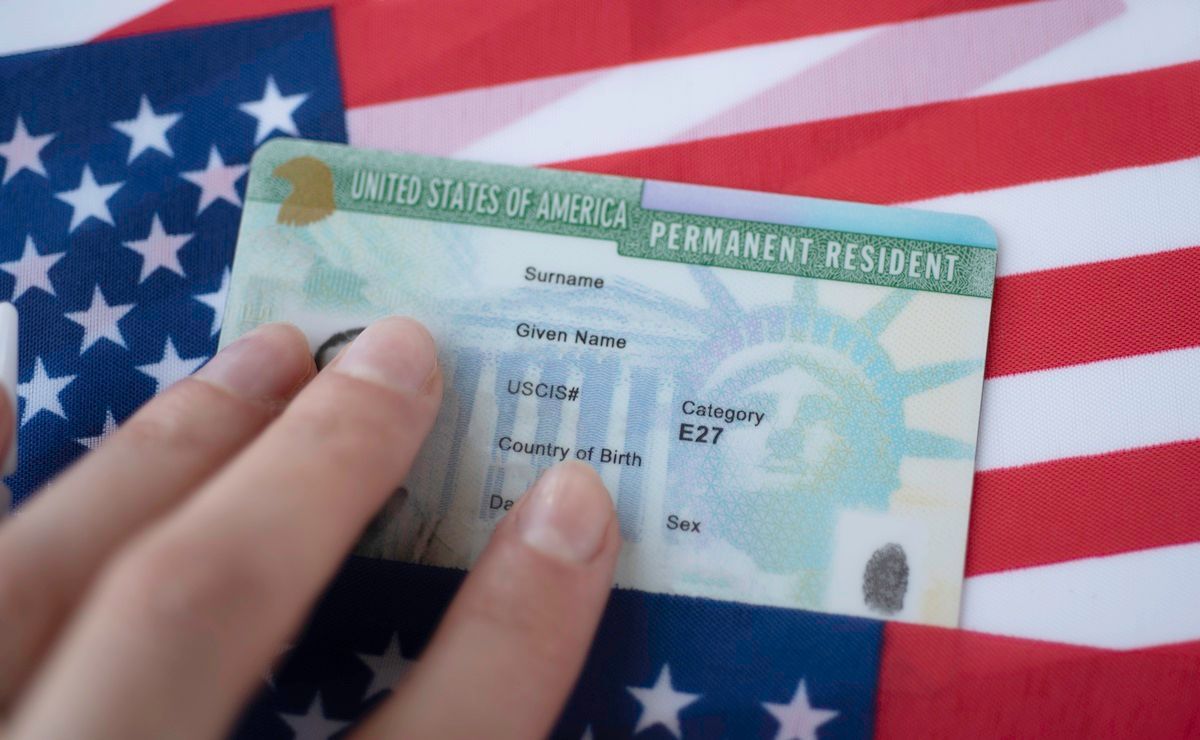
On January 20, 2025, President Donald Trump signed an executive order titled "Protecting the Meaning and Value of American Citizenship," which aims to end birthright citizenship for certain children born in the United States. This order specifically targets children born to mothers who are either unlawfully present or temporarily in the U.S. on visas, such as student, work, or tourist visas, if the father is neither a U.S. citizen nor a lawful permanent resident. Under this new policy, these children will no longer be granted automatic U.S. citizenship. The order is set to take effect 30 days from its signing and applies only to births occurring after that period, meaning it does not retroactively affect children born before the effective date.


This executive order challenges the long-standing interpretation of the 14th Amendment of the U.S. Constitution, which guarantees citizenship to all individuals born on American soil. The amendment states, "All persons born or naturalized in the United States, and subject to the jurisdiction thereof, are citizens of the United States and of the State wherein they reside." For over a century, this provision has been understood to grant citizenship to most individuals born in the U.S., regardless of their parents' immigration status.


In response to the executive order, immigrant rights advocacy groups, including the American Civil Liberties Union (ACLU), have filed lawsuits challenging its constitutionality. They argue that the order violates the clear mandate of the 14th Amendment and undermines fundamental American values. Legal experts anticipate that this issue will be contested in courts, with the potential for the order to be blocked or overturned.


On January 23, 2025, a federal judge in Seattle issued a temporary restraining order (TRO), effectively blocking the executive order from taking effect for the next 14 days. The court cited potential constitutional violations and the need for further legal briefings before any enforcement could proceed. This ruling provides temporary relief to affected families and signals the likelihood of a prolonged legal battle. Further hearings are scheduled to determine whether the order will be permanently blocked or allowed to proceed.


For families affected by this order, there is growing concern about the potential challenges their children may face without U.S. citizenship. Access to essential services, education, and employment opportunities could become more difficult for those impacted. However, it is important to remain hopeful, as the legal system provides checks and balances to ensure that any executive action aligns with constitutional principles. Historically, similar attempts to restrict birthright citizenship have faced significant legal challenges and have not been upheld.


If you or someone you know may be impacted by this executive order, staying informed and understanding your rights is crucial. At Santos Lloyd Law Firm, P.C., our trusted immigration attorneys are available to provide guidance and support during this uncertain time, please contact us if you need assistance. 

This blog is not intended to be legal advice and nothing here should be construed as establishing an attorney client relationship. Please schedule a consultation with an immigration attorney before acting on any information read here.

This Facebook widget is no longer supported.

Angelica Rice

Similar Posts


By Juliana LaMendola September 3, 2026
The Department of Homeland Security (DHS) published its final rule eliminating the longstanding "duration of status" (D/S) policy for F, J, and I visa holders, replacing it with a fixed period of admission effective September 15, 2026. This rule requires that those who need additional time to complete their programs must file Form I-539 with USCIS or travel abroad and seek to reenter to extend their authorized period of stay. F and J visa holders present in the U.S. and in valid status on September 15, 2026, will be allowed to remain in the United States until the Program End Date listed on their current Form I-20 (for F-1s) or Form DS-2019 (for J-1s), up to a maximum of four years (until September 15, 2030) plus a 60-day grace period for F-1s and a 30-day grace period for J-1s, without filing an Extension of Status request with USCIS. However, this safety net only applies while staying in the U.S.; international travel and subsequent reentry after September 15, 2026 will result in readmission under the new rule with an I-94 that expires on the Program End Date or Employment Authorization Document (EAD) expiration, but no later than four-years after their date of re-entry. Additionally, once re-admitted under the new rules, F-1s will only receive a 30-day grace period. Immediate Practice Tips: Any F-1 or J-1 nonimmigrant currently in the U.S. who plans to change programs, start a new degree level, or needs more time to complete their studies must work with their school or program sponsor to update their SEVIS record and receive an extended Form I-20 or DS-2019 before September 15, 2026. Eligible F-1 students should submit their post-completion OPT or STEM OPT work authorization applications (Form I-765) before September 15, 2026, to secure their status and drastically reduce the likelihood of needing a Form I-539 extension application. Any F-1 student who is eligible to apply for OPT or STEM OPT before March 18, 2027, should do so as soon as they are eligible to file their Form I-765. Since F-1s can file OPT applications up to 90 days in advance of graduation, F-1 students graduating before June 15,2027, should be able to file their OPT applications before March 18, 2027, and should do so to avoid also having to file Form I-539 to extend their stay. Thus, most F-1 students graduating in December 2026 and May/June 2027 should be able to take advantage of the transition rule’s delay in having to file Form I-539 applications and should only need to file Form I-765 to apply for OPT. Incoming F-1 and J-1 students who can enter the United States before the September 15, 2026 effective date (within the permissible 30-day window prior to their program start) should do so to benefit from the transition rules, including the full 60-day F-1 grace period and deferred extension requirements. Students (F-1 and J-1) who are planning international travel should return before the effective date if possible to preserve their transition benefits.  There are many parts of the rule that are not discussed here. If you are currently an F-1 or J-1 visa holder, you should proactively coordinate with your institutions and international office to protect your status and stay informed.
By Kris Quadros-Ragar August 27, 2026
U.S. Citizenship and Immigration Services (USCIS) has released updated policy guidance detailing how officers will evaluate "public charge" inadmissibility for individuals applying for green cards through adjustment of status. This update follows a Department of Homeland Security (DHS) final rule that rescinds the 2022 public charge regulations. The new policy takes effect on September 18, 2026 , and applies to all green card applications (Form I-485) postmarked or submitted on or after that date. Who Is Subject to the Public Charge Rule? Most family-based and employment-based green card applicants will be subject to the public charge ground of inadmissibility. This includes spouses, children, and parents of U.S. citizens or legal permanent residents, as well as most employment visa preference categories, investors, and diversity visa applicants. Certain categories remain explicitly exempt under immigration law. These include: Asylees and refugees Victims of human trafficking (T visa) or crime (U visa) Violence Against Women Act (VAWA) self-petitioners Special Immigrant Juveniles Temporary Protected Status (TPS) applicants Certain military-related applicants and other designated humanitarian groups How USCIS Will Make Determinations USCIS officers will evaluate whether an applicant is likely to become a public charge by reviewing the totality of their circumstances on a case-by-case basis. Key factors include: Five Statutory Factors: Age, health, family status, assets/financial resources, and education or skills. Affidavit of Support: Submission of Form I-864 executed by a sponsor. Use of Public Benefits: USCIS will look at means-tested public benefits, such as cash assistance for income maintenance, housing assistance, food stamps (SNAP), or college financial aid. Note on timing: For benefits received before September 18, 2026, USCIS will only consider public cash assistance for income maintenance and long-term institutionalization at government expense. For benefits received on or after September 18, 2026, the broader consideration of all listed means-tested benefits will apply. Public Charge Bonds If an officer determines that an applicant is inadmissible solely on public charge grounds, USCIS may issue a Notice of Intent to Deny that invites the applicant to post a public charge bond using Form I-945. If an invited applicant successfully posts the required cash or surety bond, USCIS may approve the application for permanent residence. Public charge bonds can only be submitted if explicitly invited by USCIS. Santos Lloyd Law Firm will continue to monitor immigration developments closely and provide updates as further implementation details are released. For more information, please access: https://www.uscis.gov/newsroom/alerts/uscis-issues-guidance-on-making-public-charge-inadmissibility-determination
By Kris Quadros-Ragar August 20, 2026
The Department of Homeland Security (DHS) is considering a regulatory proposal that would remove the discretionary 60-day grace period currently available to certain nonimmigrant visa holders (including H-1B, L-1, TN, E, and O-1) and their dependents. The draft rule is currently undergoing interagency review by the Office of Management and Budget (OMB) and has not yet been formally published for public feedback. What This Means Right Now Nothing changes today. The 60-day grace period remains in effect while this rule goes through the approval process. Under current rules, if your job ends early, you have up to 60 days (or until your I-94 expires) to leave the U.S., find a new sponsor, or apply to change status. What Could Change If approved, foreign workers who lose their jobs would no longer get automatic time to find a new employer or change status from within the U.S. They would generally be required to leave the country immediately. Next Steps Once the OMB finishes its initial review, the proposed rule will be published in the Federal Register, opening a public comment period of 30 to 60 days. Based on feedback received during this time, DHS may decide to alter, withdraw, or proceed with the proposal. If the government decides to finalize the rule, the entire process will likely take several months before taking effect. Santos Lloyd Law Firm will continue to monitor developments closely and will share updates on our immigration blog and social media pages as more details emerge.
By Josephine Franz June 11, 2026
For many of our clients, premium processing has long felt less like a luxury and more like a necessity. Whether it's an artist with a tour date, a startup founder with investors waiting, or an executive whose H-1B extension is tied to a project deadline, the ability to get a USCIS decision in fifteen business days has been a cornerstone of business and entertainment immigration planning. But 2026 has brought meaningful changes. On March 1, 2026, USCIS implemented a new round of premium processing fee increases under the biennial inflation adjustment authorized by the USCIS Stabilization Act. With fees now climbing across every eligible form, employers, foreign nationals, and their counsel are asking a fair question: at these prices, is premium processing still worth it? The short answer is: often yes but no longer always. Here is what has changed, what hasn't, and how to think strategically about your filings this year. What Premium Processing Actually Buys You Premium processing is an optional, fee-based service that obligates USCIS to take action on a qualifying petition or application within a defined window. "Action" does not necessarily mean approval USCIS may issue an approval, a denial, a Request for Evidence (RFE), a Notice of Intent to Deny, or open an investigation. But it must do something within the guaranteed timeframe, or refund the premium fee. The current adjudication windows are: 15 business days for most Form I-129 nonimmigrant petitions (including H-1B, L-1, O-1, P-1, TN, and E-3) and most Form I-140 employment-based immigrant petitions 45 business days for Form I-140 petitions in the EB-1C (multinational executive/manager) and EB-2 National Interest Waiver (NIW) categories 30 business days for eligible Form I-539 change-of-status applications and Form I-765 applications for F-1 OPT and STEM OPT employment authorization When USCIS issues an RFE, the clock pauses and restarts only when the agency receives the response, a detail that surprises many petitioners and is worth planning around. The 2026 Fee Increases at a Glance The Department of Homeland Security's final rule, published in the Federal Register on January 12, 2026, raised premium processing fees by an average of roughly 5.7 percent based on inflation between June 2023 and June 2025. Any Form I-907 postmarked on or after March 1, 2026, must include the updated fee, or USCIS will reject the filing outright.
Show More
By Juliana LaMendola September 3, 2026
The Department of Homeland Security (DHS) published its final rule eliminating the longstanding "duration of status" (D/S) policy for F, J, and I visa holders, replacing it with a fixed period of admission effective September 15, 2026. This rule requires that those who need additional time to complete their programs must file Form I-539 with USCIS or travel abroad and seek to reenter to extend their authorized period of stay. F and J visa holders present in the U.S. and in valid status on September 15, 2026, will be allowed to remain in the United States until the Program End Date listed on their current Form I-20 (for F-1s) or Form DS-2019 (for J-1s), up to a maximum of four years (until September 15, 2030) plus a 60-day grace period for F-1s and a 30-day grace period for J-1s, without filing an Extension of Status request with USCIS. However, this safety net only applies while staying in the U.S.; international travel and subsequent reentry after September 15, 2026 will result in readmission under the new rule with an I-94 that expires on the Program End Date or Employment Authorization Document (EAD) expiration, but no later than four-years after their date of re-entry. Additionally, once re-admitted under the new rules, F-1s will only receive a 30-day grace period. Immediate Practice Tips: Any F-1 or J-1 nonimmigrant currently in the U.S. who plans to change programs, start a new degree level, or needs more time to complete their studies must work with their school or program sponsor to update their SEVIS record and receive an extended Form I-20 or DS-2019 before September 15, 2026. Eligible F-1 students should submit their post-completion OPT or STEM OPT work authorization applications (Form I-765) before September 15, 2026, to secure their status and drastically reduce the likelihood of needing a Form I-539 extension application. Any F-1 student who is eligible to apply for OPT or STEM OPT before March 18, 2027, should do so as soon as they are eligible to file their Form I-765. Since F-1s can file OPT applications up to 90 days in advance of graduation, F-1 students graduating before June 15,2027, should be able to file their OPT applications before March 18, 2027, and should do so to avoid also having to file Form I-539 to extend their stay. Thus, most F-1 students graduating in December 2026 and May/June 2027 should be able to take advantage of the transition rule’s delay in having to file Form I-539 applications and should only need to file Form I-765 to apply for OPT. Incoming F-1 and J-1 students who can enter the United States before the September 15, 2026 effective date (within the permissible 30-day window prior to their program start) should do so to benefit from the transition rules, including the full 60-day F-1 grace period and deferred extension requirements. Students (F-1 and J-1) who are planning international travel should return before the effective date if possible to preserve their transition benefits.  There are many parts of the rule that are not discussed here. If you are currently an F-1 or J-1 visa holder, you should proactively coordinate with your institutions and international office to protect your status and stay informed.
By Kris Quadros-Ragar August 27, 2026
U.S. Citizenship and Immigration Services (USCIS) has released updated policy guidance detailing how officers will evaluate "public charge" inadmissibility for individuals applying for green cards through adjustment of status. This update follows a Department of Homeland Security (DHS) final rule that rescinds the 2022 public charge regulations. The new policy takes effect on September 18, 2026 , and applies to all green card applications (Form I-485) postmarked or submitted on or after that date. Who Is Subject to the Public Charge Rule? Most family-based and employment-based green card applicants will be subject to the public charge ground of inadmissibility. This includes spouses, children, and parents of U.S. citizens or legal permanent residents, as well as most employment visa preference categories, investors, and diversity visa applicants. Certain categories remain explicitly exempt under immigration law. These include: Asylees and refugees Victims of human trafficking (T visa) or crime (U visa) Violence Against Women Act (VAWA) self-petitioners Special Immigrant Juveniles Temporary Protected Status (TPS) applicants Certain military-related applicants and other designated humanitarian groups How USCIS Will Make Determinations USCIS officers will evaluate whether an applicant is likely to become a public charge by reviewing the totality of their circumstances on a case-by-case basis. Key factors include: Five Statutory Factors: Age, health, family status, assets/financial resources, and education or skills. Affidavit of Support: Submission of Form I-864 executed by a sponsor. Use of Public Benefits: USCIS will look at means-tested public benefits, such as cash assistance for income maintenance, housing assistance, food stamps (SNAP), or college financial aid. Note on timing: For benefits received before September 18, 2026, USCIS will only consider public cash assistance for income maintenance and long-term institutionalization at government expense. For benefits received on or after September 18, 2026, the broader consideration of all listed means-tested benefits will apply. Public Charge Bonds If an officer determines that an applicant is inadmissible solely on public charge grounds, USCIS may issue a Notice of Intent to Deny that invites the applicant to post a public charge bond using Form I-945. If an invited applicant successfully posts the required cash or surety bond, USCIS may approve the application for permanent residence. Public charge bonds can only be submitted if explicitly invited by USCIS. Santos Lloyd Law Firm will continue to monitor immigration developments closely and provide updates as further implementation details are released. For more information, please access: https://www.uscis.gov/newsroom/alerts/uscis-issues-guidance-on-making-public-charge-inadmissibility-determination
By Kris Quadros-Ragar August 20, 2026
The Department of Homeland Security (DHS) is considering a regulatory proposal that would remove the discretionary 60-day grace period currently available to certain nonimmigrant visa holders (including H-1B, L-1, TN, E, and O-1) and their dependents. The draft rule is currently undergoing interagency review by the Office of Management and Budget (OMB) and has not yet been formally published for public feedback. What This Means Right Now Nothing changes today. The 60-day grace period remains in effect while this rule goes through the approval process. Under current rules, if your job ends early, you have up to 60 days (or until your I-94 expires) to leave the U.S., find a new sponsor, or apply to change status. What Could Change If approved, foreign workers who lose their jobs would no longer get automatic time to find a new employer or change status from within the U.S. They would generally be required to leave the country immediately. Next Steps Once the OMB finishes its initial review, the proposed rule will be published in the Federal Register, opening a public comment period of 30 to 60 days. Based on feedback received during this time, DHS may decide to alter, withdraw, or proceed with the proposal. If the government decides to finalize the rule, the entire process will likely take several months before taking effect. Santos Lloyd Law Firm will continue to monitor developments closely and will share updates on our immigration blog and social media pages as more details emerge.
Show More