


Exploring the B1 and B2 Visitor Visas: Your Gateway to Business and Tourism in the United States
Kris Quadros-Ragar • October 3, 2024

The United States has long been a prime destination for both business ventures and leisure travel. Every year, thousands of individuals from across the globe visit the U.S. for short-term purposes such as business meetings or vacations. To do so, foreign nationals must obtain a non-immigrant visa, with the B1/B2 visa being one of the most commonly used for temporary visits.
The B1/B2 visa allows individuals to enter the U.S. for specific purposes, whether for business-related activities or exploring the country’s tourist attractions. Although both visas fall under the same category, they serve distinct purposes depending on the nature of the visit.
The B1/B2 visa, issued by the U.S. Department of State, is a dual-purpose visa that enables non-immigrants to enter the United States temporarily for either business (B1) or tourism and other non-business activities (B2). This combined visa offers flexibility, allowing travelers to handle both business and leisure matters within a single trip.
The B1 visa
is intended for those visiting the U.S. for business purposes. It’s important to note that the B1 visa does not allow for employment or managing a business in the U.S. Instead, it’s ideal for individuals who need to:
- Consult with business associates.
- Negotiate contracts or finalize deals.
- Attend conferences, conventions, or seminars in fields such as education, science, and trade.
In short, the B1 visa is for individuals conducting essential business activities during their temporary stay, without seeking employment in the U.S.
The B2 visa, on the other hand, is designed for individuals visiting the U.S. for non-business purposes such as:
- Tourism or vacations.
- Visiting friends or family.
- Receiving medical treatment.
This visa also allows for participation in other non-business activities, such as social events or short-term recreational courses.
Once granted, both B1 and B2 visas typically allow for stays of up to six months. The exact length of your stay is determined by U.S. Customs and Border Protection (CBP) officers upon your entry, based on the purpose of your visit and the terms of your visa.
Whether visiting the U.S. to explore business opportunities or enjoy the country’s many tourist attractions, the B1/B2 visa provides a flexible option for short-term stays. By understanding the requirements and differences between these visas, you can better navigate the application process and make the most of your trip to the U.S.
This blog is not intended to be legal advice and nothing here should be construed as establishing an attorney client relationship. Please schedule a consultation with an immigration attorney before acting on any information read here.
This Facebook widget is no longer supported.
Kris Quadros-Ragar
Similar Posts
Embarking on the EB-5 immigration journey is both a profound personal endeavor and a strategic investment decision. For individuals seeking to make the United States their new home while contributing to its economic landscape, the EB-5 Immigrant Investor Program offers a pathway unlike any other. This program, established by the U.S. government in 1990, provides foreign investors with the opportunity to obtain permanent residency in the United States by investing in job-creating enterprises . However, navigating the complexities of the EB-5 process requires a thorough understanding of its intricacies, requirements, and potential pitfalls. In this guide, we provide a brief overview of the steps and documents involved in the EB-5 immigration process, shedding light on its key components, eligibility criteria, investment options, and procedural steps, empowering prospective investors with the knowledge needed to embark on this transformative journey with confidence. Before selecting a project and making the investment, it is important for an EB-5 investor to meet with an immigration attorney to strategize for the application. It is required to show the Immigration Service that all funds used in the investment were lawfully earned and retained , so your attorney will want to understand where the money for the investment is coming from and where it has been held since it was earned. Once satisfied with the source and tracing of funds, the investor can select a project to invest in. Following the passage of the EB-5 Reform & Integrity Act, certain investment projects have already been pre-approved by USCIS by filing form I-956 and receiving designation as a Regional Investment Center. The required minimum investment is $1,050,000 by default; however, this amount is reduced for investment centers in “Targeted Employment Areas” to $800,000 . After submitting the investment to the regional center, the investor will then work with their attorney to create the I-526 petition. At this stage of the case, it is time to show USCIS the source and tracing of all of the funds used for the investment. The types documentation required in order to show the lawful source and tracing of funds is extremely broad and highly dependent on where the money is coming from in each particular case, but the most common documents include W-2 or 1099 tax forms, federal and state tax returns, bank account statements, purchase and sale contracts from the sale of real estate, stock certificates, loan contracts, inheritance documents, and wire transfer records, among many other possibilities . EB-5 applicants can either process their green cards through USCIS by filing an I-485 application for Adjustment of Status, or process through the consulate in their home country . If already in the United States on another valid status, the Adjustment of Status application can be submitted concurrently with the I-526 petition. If processing through a consulate overseas, the investor will have to wait until the I-526 is approved before beginning the consular process. The primary applicant, along with a spouse and any unmarried children under 21 years of age are able to receive permanent residency through the EB-5 process. At the completion of either process, whether requesting the Green Card within the United States or seeking entry through a consulate, USCIS will issue conditional green cards, with a validity of two years . Within the last three months before the conditional green card expires , the investor and family will need to file an I-829 application for removal of conditions on the green card. At this stage, nearly two years after the investment has been made, the Immigration Service is confirming whether the investment remains in the project and the requisite 10 jobs have been created . Following I-829 approval, the investor and their family will receive permanent green cards, with a 10-year validity. The investor and family will be able to apply for United States Citizenship five years after the initial green card is issued . The conditional green card does count for this purpose, so citizenship will become a possibility approximately 3 years after the permanent green cards are issued. In conclusion, the EB-5 Immigrant Investor Program stands as a unique avenue for individuals around the globe to fulfill their aspirations of living and thriving in the United States. Through strategic investment and dedication to job creation, participants not only secure permanent residency but also contribute to the nation's economic growth and prosperity. However, it is crucial for prospective investors to approach the EB-5 process with meticulous planning, thorough research, and expert guidance to navigate its complexities successfully . By understanding the program's requirements, exploring investment options, and adhering to procedural guidelines, aspiring immigrants can embark on their EB-5 journey with clarity and confidence. Ultimately, the EB-5 program represents more than just a pathway to residency—it embodies the spirit of entrepreneurship, innovation, and opportunity that defines the American dream. If you believe you may qualify for the EB-5 program or if you have any questions, please schedule a consultation with one of our experienced attorneys and we will be more than happy to assist you.

Entrepreneurs and investors are key drivers of economic growth and job creation, and the United States has long been a destination of choice for those seeking to start or grow their businesses. However, navigating the U.S. immigration system can be complex and time-consuming. In this article, we will discuss the various non-immigrant visa options available to entrepreneurs and investors looking to enter the United States. L-1 Intracompany Transferee Visa The L-1 Intracompany Transferee Visa is a visa category specifically designed for executives, managers, and employees possessing specialized knowledge who are relocating from a foreign corporation to a U.S. affiliate. The eligibility for an L-1 visa requires the foreign corporation and the U.S. affiliate to be connected through common ownership or control. Transferees must also demonstrate that they have been employed abroad for at least 12 months in an executive, managerial, and specialized knowledge capacity. An employee being relocated might also be heading to the United States to set up an office if the company doesn't have an existing presence there. The L-1 visa isn't the best choice for someone in the early stages of launching a company, particularly if the business is being established in the United States. However, it could be a viable option for an entrepreneur who has, for instance, kick-started a business outside of the United States which will maintain its operations, or if the entrepreneur merges operations with a foreign company where they have previously been employed. E-1 Treaty Trader Visa E-1 Treaty Trader Visa category is designated for nationals of countries with which the U.S. maintains treaties of commerce and navigation. An entrepreneur qualifying for an E-1 visa must be entering the U.S. to carry out substantial trade, including trade in services or technology, principally between the U.S. and the treaty country. Trade, as defined, must involve an exchange of goods, money, or services. Virtually any goods or services can meet this requirement. The transaction flow between the two countries should be verifiable, typically done through documents such as purchase orders, wire transfers, or bills of lading. To determine the substantiality of the trade, the Department of State (DOS) will assess the frequency and monetary value of the transactions. More regular, high-value transactions are given greater consideration. However, smaller businesses can also qualify if they can demonstrate that the transaction volume is sufficient to support the treaty trader(s) and their family. The DOS applies a general rule stating that at least 50% of the trade must be between the United States and the treaty country. Thus, applicants should provide evidence of their total business transactions and proof that a minimum of 50% is between the two countries. The remaining trade can be domestic or international with other countries. Even if a US-based subsidiary meets the 50% requirement, the parent company abroad does not necessarily need to conduct 50% of its trade with the United States. Due to the requirement of demonstrating substantial trade history, it may be challenging for early-stage startups to qualify for an E-1. This visa type is more frequently used by established entrepreneurs with a foreign business and a US customer base, who wish to continue their operations in the US. In some instances, foreign firms aiming to penetrate the US market may use an E-1 for a newly established US subsidiary and start moving inventory for sale in the US. In this case, all trade may be between the foreign parent and US subsidiary, thereby comfortably meeting the 50% threshold. E-2 Treaty Investor Visa E-2 Treaty Investor Visa is for citizens of countries that have a treaty of commerce and navigation with the United States. To qualify for an E-2 visa, an entrepreneur must be coming to the United States to develop and direct the operations of a business in which they have invested, or are in the process of investing, a substantial amount of capital. In the classic example of an E-2 investment, the E-2 investor transfers their personal wealth from a foreign bank account into the bank account of their new US enterprise, thereby establishing their investment. However, the Foreign Affairs Manual (FAM) provides some flexibility, enabling the officer to consider other "arrangements" as an "investment." For those not intending to finance the E-2 enterprise entirely or partially with their personal funds, the nationality of other investors needs to be considered to ensure that at least 50% of the company shares remain in the hands of nationals from the E-2 treaty country. For instance, suppose one co-founder is American and the other is French, and they each own 50% of the company, contributing $40,000 from their personal wealth as initial capital for the company. To raise additional funds, they each decide to swap 7% of their equity (14% in total) with an angel investor for $150,000. If the angel investor is also French, then 57% of the company is now owned by French nationals; but if the angel is a U.S. citizen, then only 43% of the company is French, and it no longer qualifies as a French company for E-2 purposes. In this scenario, the founders will need to switch to another visa type before the equity exchange, as their E-2 will no longer be valid when the company loses its treaty nationality. A central concern for every E-2 application is the "source of funds." The applicant must clearly demonstrate the lawful origin of their investment funds, along with evidence of ownership and control. Moreover, to be classified as an E-2 investment, the invested assets or funds must be "at risk." This means that if the business fails, the investment is proportionately lost. Though the investment capital may be loan-based, the loan cannot be secured against the assets of the E-2 enterprise. Personal loans, which may be secured by personal assets like a second mortgage or unsecured loans typically obtained from family, friends, or business partners, are permissible. O-1 Visa The O-1 visa category is a unique and advantageous option for startup entrepreneurs and business owners who have demonstrated exceptional prowess in their field. The O-1A visa variant specifically caters to individuals exhibiting extraordinary ability in the sciences, education, business, or athletics. This makes it a viable avenue for those looking to establish or expand their business ventures in the US without the necessity of maintaining an overseas office or providing evidence of trade and investment, as required by L-1 and E-1/E-2 visas. Unlike the more traditional visa categories, the O-1A visa shifts the emphasis onto the beneficiary's individual achievements within their domain. It demands that the beneficiary meets at least three of the eight regulatory criteria set forth by the US Immigration Services. These criteria form a comprehensive measure of the individual's accomplishments, recognition, and overall standing in their respective field. For instance, if the beneficiary has been the recipient of nationally or internationally recognized prizes or awards, it highlights their excellence and industry-leading competence. Alternatively, membership in prestigious associations which require commendable achievements as judged by recognized experts can also serve as evidence of their extraordinary ability. The O-1 visa offers an alternate route that places an emphasis on individual expertise and recognition in the applicant's field, rather than specific trade or investment quotas. This visa is especially beneficial for those who have demonstrated exceptional capability and achieved a high degree of success in their respective business domain. Overall, the O-1A visa offers an effective immigration route for extraordinarily talented entrepreneurs and business owners. By meeting and surpassing the eligibility criteria, they can gain access to the vast opportunities in the US market, thereby furthering their business ventures and contributing to the economic growth and diversification of the US. Conclusion For foreign entrepreneurs and investors, several U.S. immigration options are available: the E-1 treaty trader visa, the E-2 treaty investor visa, the L-1 intra-company transferee visa, and the O-1 visa for individuals with extraordinary ability. While E-1 and E-2 visas center on trade and investment respectively, the L-1 is for managers or executives transferring to a U.S. branch of their company, and the O-1 visa acknowledges individual expertise and accomplishments. Each visa has unique prerequisites, necessitating the guidance of an immigration attorney for optimal strategy selection. Correct navigation of these options opens vast U.S. entrepreneurial opportunities and resources.

There are several types of visas that allow you to come to the United States and work. Employment-based visas will give you the opportunity to live and work in the U.S. Your education, skills, and experience are some of the things used to determine who is eligible for an employment-based visa. One “EB” visa many people qualify for is an EB-3 visa.

If you file an EB-1 petition based on your extraordinary ability in your field, and it has been approved what happens next?
First congratulations are in order because that is great news! Second you now need to gather up some documents and information to apply for Adjustment of Status.
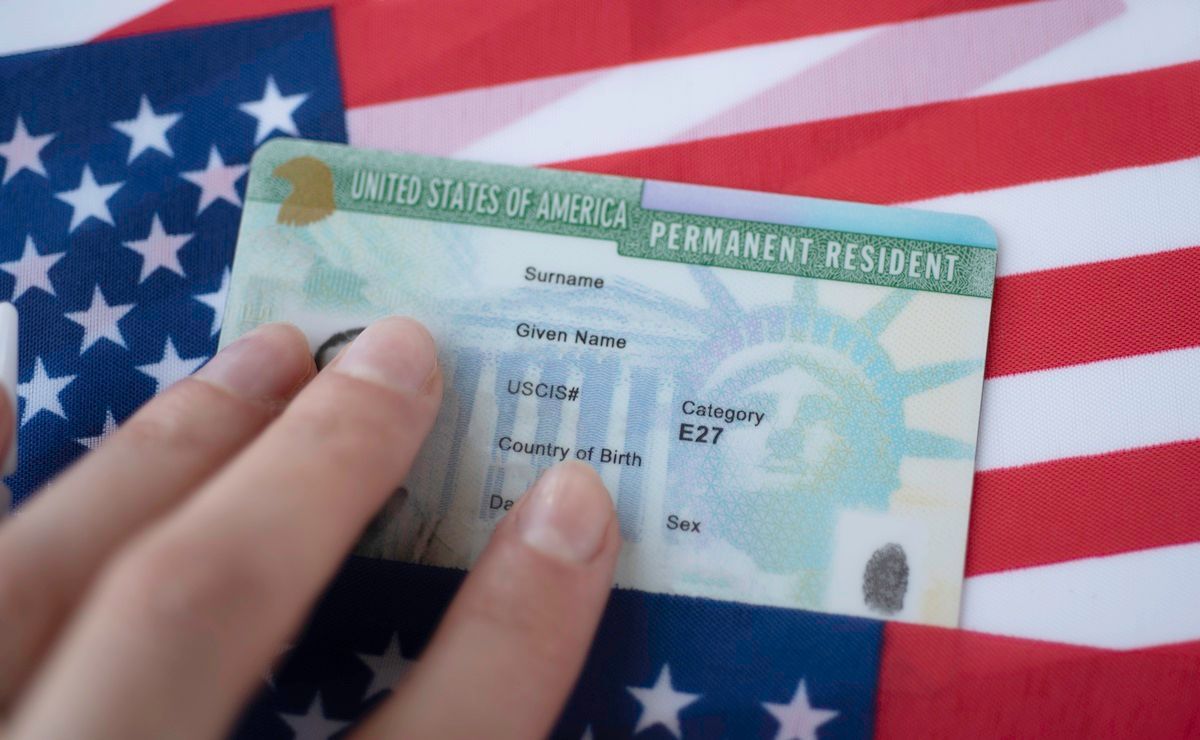
Receiving a two-year green card through marriage is an important step, but it leaves another process ahead: removing the conditions on permanent residence. For couples preparing a joint Form I-751 petition, understanding the filing window and organizing evidence early can make the preparation more manageable. The starting point is your own record. Locate the green card, the notice granting residence, and copies of the earlier immigration filing. Check the date conditional residence began and the card’s expiration date. Do not calculate the next deadline solely from your wedding anniversary or the date an attorney first submitted your case. Understand the joint filing window Under 8 CFR 216.4 , a joint I-751 petition generally must be filed during the 90-day period immediately before the second anniversary of obtaining conditional permanent residence. This is a window before that anniversary, not an additional 90 days after the card expires. Preparing early and filing early are different things. You can begin gathering records well before the window opens, while coordinating the correct submission date with your attorney. A joint petition also requires the appropriate signatures, fee, and supporting documentation. Confirm the current form instructions, accepted filing method, and applicable fee when the case is ready to submit. Build a record of the marriage over time The regulation identifies several types of evidence that may help show the marriage was not entered into to evade immigration law: jointly owned property, a lease for a shared home, combined financial resources, children’s birth certificates, and statements from people with personal knowledge of the relationship. These examples do not mean every couple must have a mortgage, joint accounts, or children. The evidence should accurately reflect your circumstances. A clear explanation of how you manage your household can be more useful than forcing your relationship into a checklist that does not fit. As a practical preparation step, organize records by date and type. Review whether they help explain the course of the marriage, rather than collecting only documents created shortly before filing. Flag separate addresses, name changes, or gaps in the records for your attorney. Never alter a document to make the history appear simpler. Tell your attorney if circumstances change This article addresses joint filing. Divorce, the death of a spouse, abuse, or other significant changes may require a different filing basis or an individualized assessment. Separate waiver provisions exist, with their own requirements. A spouse’s unwillingness to sign does not, by itself, establish eligibility for every waiver. Do not assume that the joint 90-day window answers every question about a non-joint case. If the relationship changes while preparing the petition or while it is pending, inform counsel promptly. You should not need to invent a continuing relationship to seek advice about the options that may actually apply. Keep tracking the case after submission The regulation provides that conditional resident status is automatically extended, when necessary, upon receipt of a properly filed I-751 until adjudication. Proof of that status is a separate practical matter: keep the receipt notice and have counsel review its wording before relying on it for travel or employment documentation. This article does not promise a particular receipt-extension period or processing time. A missed deadline calls for prompt legal attention. The regulation allows some late joint filings where USCIS accepts a written showing of good cause, but acceptance is not automatic. Do not assume a late petition cures the problem without further review. Santos Lloyd Law Firm, P.C. can help you assess the filing window, organize relevant evidence, and identify changes that may affect your I-751 strategy. Contact the firm early enough to review the facts before the deadline approaches.
October begins a new federal fiscal year, but that does not mean every green card applicant moves to the front of the line. The Department of State’s October 2026 Visa Bulletin sets out the visa availability that applicants in family-sponsored and employment-based preference categories need to review this month.

Santos Lloyd Law Firm takes great pride in announcing that Partner Flavia Santos Lloyd has been invited to join the Fellows of the American Bar Foundation. As a highly selective global network, the organization recognizes legal professionals across both the public and private sectors who embody the absolute highest standards of the practice. Admission to this distinguished group highlights Flavia’s outstanding legal career, professional integrity, and deep impact on the legal community. Our team celebrates Flavia on this well-deserved recognition!
