

2026 Visa Freeze and Travel Bans
Juliana LaMendola • March 13, 2026

On January 14, 2026, the Trump administration announced a freeze on immigrant visa issuance for nationals of 75 countries. The administration states that this “visa freeze” is intended to review security protocols, “reduce risks,” and control immigration flows. However, the immediate reality is that this change in policy has temporarily suspended visa processing and restricted travel for applicants from numerous countries across the globe. While the legal landscape surrounding these suspensions is highly fluid and subject to change, it is important to consider how this “visa freeze” might impact your current status or immigration plans.
The scope of the restrictions varies drastically depending on your country of origin and specific visa category. Most notably, a nationality-based travel ban restricts visa issuance for 19 countries: Afghanistan, Burma, Chad, Republic of Congo, Equatorial Guinea, Eritrea, Haiti, Iran, Libya, Somalia, Sudan, Yemen, Burundi, Cuba, Laos, Sierra Leone, Togo, Turkmenistan, and Venezuela. Beyond this targeted ban, a broader freeze affects applicants from a designated list of up to 75 countries, leading to indefinite delays for many visa petitions. However, it is important to note that immigrant visa applications first need to be processed through USCIS, which has not paused processing applications from the 75 countries. Thus, it is important to contact an attorney to understand at what point in the process this visa freeze may affect your case.
While Brazil is included in the list of 75 countries, at the time of this publication, the freeze does not include non-immigrant visas for Brazil. Non-immigrant visas are granted to foreign nationals seeking to enter the United States on a temporary basis for specific purposes, such as tourism, studying, or temporary work. This means that Brazilian applicants can still safely pursue non-immigrant employment options, such as O visas for individuals with extraordinary ability or P visas for internationally recognized athletes, without being subjected to the current travel bans or suspensions.
This alert is for informational purposes only and does not constitute legal advice. There are many changes and uncertainties, so please consult with a qualified attorney at Santos Lloyd Law Firm, P.C. to understand how these evolving policies might affect your specific case
This blog is not intended to be legal advice and nothing here should be construed as establishing an attorney client relationship. Please schedule a consultation with an immigration attorney before acting on any information read here.
Juliana LaMendola
Similar Posts

On September 14, 2026, the U.S. District Court for the District of Massachusetts issued a nationwide preliminary injunction in Presidents' Alliance on Higher Education and Immigration v. U.S. Department of Homeland Security , halting the implementation of the Department of Homeland Security (DHS) final rule that was scheduled to eliminate “duration of status” (D/S) on September 15, 2026. As a result of this nationwide order, DHS is blocked from enforcing fixed periods of admission for F-1 students, J-1 exchange visitors, and I media representatives while the litigation moves forward. Because the current “duration of status” framework remains in full effect, F, J, and I visa holders are not required to file Form I-539 extension of stay applications to remain in valid status beyond program end dates at this time. Furthermore, restrictions on academic transfers, constraints on enrolling in second programs at the same degree level, 240-day caps on continued employment while extensions are pending, and shortened grace periods do not apply during the injunction. F-1 nonimmigrants retain the full 60-day post-completion grace period, and J-1 holders maintain their 30-day grace period. However, please note that this preliminary injunction is not a final ruling invalidating the rule , and a status conference is scheduled for October 2, 2026, to determine next steps in the litigation. Immediate Practice Tips: Inspect I-94 Travel Records Upon Reentry: F, J, and I visa holders currently admitted under D/S retain their status and should continue to be readmitted under D/S following international travel until the injunction is lifted. However, because the I-94 record controls legal stay, travelers must inspect their CBP-issued Form I-94 immediately upon reentry to confirm the "Admit Until Date" states "D/S" rather than a specific expiration date. If a specific date is mistakenly recorded, contact a local CPB Deferred Inspection Site. Notify HR and Review Workplace Compliance: Employers sponsoring F-1 or J-1 employees should inform HR and hiring managers that the September 15 fixed-period rule is postponed and standard D/S rules govern. This development does not alter standard filing windows or Form I-9 verification procedures for post-completion OPT or STEM OPT extensions. Maintain Operational Readiness and Defer Unnecessary Filings: Visa holders and employers should defer travel or filing strategy decisions made solely in anticipation of the fixed-admission rule. Because DHS may appeal or the court could alter the timeline on short notice, institutions and visa holders should maintain readiness to adjust plans if implementation resumes. There are many evolving components to this litigation. If you are an F-1, J-1, or I visa holder, sponsoring institution, or employer, you should proactively coordinate with your international student office and legal counsel to protect your status and monitor upcoming court proceedings.

The Department of Homeland Security (DHS) published its final rule eliminating the longstanding "duration of status" (D/S) policy for F, J, and I visa holders, replacing it with a fixed period of admission effective September 15, 2026. This rule requires that those who need additional time to complete their programs must file Form I-539 with USCIS or travel abroad and seek to reenter to extend their authorized period of stay. F and J visa holders present in the U.S. and in valid status on September 15, 2026, will be allowed to remain in the United States until the Program End Date listed on their current Form I-20 (for F-1s) or Form DS-2019 (for J-1s), up to a maximum of four years (until September 15, 2030) plus a 60-day grace period for F-1s and a 30-day grace period for J-1s, without filing an Extension of Status request with USCIS. However, this safety net only applies while staying in the U.S.; international travel and subsequent reentry after September 15, 2026 will result in readmission under the new rule with an I-94 that expires on the Program End Date or Employment Authorization Document (EAD) expiration, but no later than four-years after their date of re-entry. Additionally, once re-admitted under the new rules, F-1s will only receive a 30-day grace period. Immediate Practice Tips: Any F-1 or J-1 nonimmigrant currently in the U.S. who plans to change programs, start a new degree level, or needs more time to complete their studies must work with their school or program sponsor to update their SEVIS record and receive an extended Form I-20 or DS-2019 before September 15, 2026. Eligible F-1 students should submit their post-completion OPT or STEM OPT work authorization applications (Form I-765) before September 15, 2026, to secure their status and drastically reduce the likelihood of needing a Form I-539 extension application. Any F-1 student who is eligible to apply for OPT or STEM OPT before March 18, 2027, should do so as soon as they are eligible to file their Form I-765. Since F-1s can file OPT applications up to 90 days in advance of graduation, F-1 students graduating before June 15,2027, should be able to file their OPT applications before March 18, 2027, and should do so to avoid also having to file Form I-539 to extend their stay. Thus, most F-1 students graduating in December 2026 and May/June 2027 should be able to take advantage of the transition rule’s delay in having to file Form I-539 applications and should only need to file Form I-765 to apply for OPT. Incoming F-1 and J-1 students who can enter the United States before the September 15, 2026 effective date (within the permissible 30-day window prior to their program start) should do so to benefit from the transition rules, including the full 60-day F-1 grace period and deferred extension requirements. Students (F-1 and J-1) who are planning international travel should return before the effective date if possible to preserve their transition benefits. There are many parts of the rule that are not discussed here. If you are currently an F-1 or J-1 visa holder, you should proactively coordinate with your institutions and international office to protect your status and stay informed.

U.S. Citizenship and Immigration Services (USCIS) has released updated policy guidance detailing how officers will evaluate "public charge" inadmissibility for individuals applying for green cards through adjustment of status. This update follows a Department of Homeland Security (DHS) final rule that rescinds the 2022 public charge regulations. The new policy takes effect on September 18, 2026 , and applies to all green card applications (Form I-485) postmarked or submitted on or after that date. Who Is Subject to the Public Charge Rule? Most family-based and employment-based green card applicants will be subject to the public charge ground of inadmissibility. This includes spouses, children, and parents of U.S. citizens or legal permanent residents, as well as most employment visa preference categories, investors, and diversity visa applicants. Certain categories remain explicitly exempt under immigration law. These include: Asylees and refugees Victims of human trafficking (T visa) or crime (U visa) Violence Against Women Act (VAWA) self-petitioners Special Immigrant Juveniles Temporary Protected Status (TPS) applicants Certain military-related applicants and other designated humanitarian groups How USCIS Will Make Determinations USCIS officers will evaluate whether an applicant is likely to become a public charge by reviewing the totality of their circumstances on a case-by-case basis. Key factors include: Five Statutory Factors: Age, health, family status, assets/financial resources, and education or skills. Affidavit of Support: Submission of Form I-864 executed by a sponsor. Use of Public Benefits: USCIS will look at means-tested public benefits, such as cash assistance for income maintenance, housing assistance, food stamps (SNAP), or college financial aid. Note on timing: For benefits received before September 18, 2026, USCIS will only consider public cash assistance for income maintenance and long-term institutionalization at government expense. For benefits received on or after September 18, 2026, the broader consideration of all listed means-tested benefits will apply. Public Charge Bonds If an officer determines that an applicant is inadmissible solely on public charge grounds, USCIS may issue a Notice of Intent to Deny that invites the applicant to post a public charge bond using Form I-945. If an invited applicant successfully posts the required cash or surety bond, USCIS may approve the application for permanent residence. Public charge bonds can only be submitted if explicitly invited by USCIS. Santos Lloyd Law Firm will continue to monitor immigration developments closely and provide updates as further implementation details are released. For more information, please access: https://www.uscis.gov/newsroom/alerts/uscis-issues-guidance-on-making-public-charge-inadmissibility-determination

The Department of Homeland Security (DHS) is considering a regulatory proposal that would remove the discretionary 60-day grace period currently available to certain nonimmigrant visa holders (including H-1B, L-1, TN, E, and O-1) and their dependents. The draft rule is currently undergoing interagency review by the Office of Management and Budget (OMB) and has not yet been formally published for public feedback. What This Means Right Now Nothing changes today. The 60-day grace period remains in effect while this rule goes through the approval process. Under current rules, if your job ends early, you have up to 60 days (or until your I-94 expires) to leave the U.S., find a new sponsor, or apply to change status. What Could Change If approved, foreign workers who lose their jobs would no longer get automatic time to find a new employer or change status from within the U.S. They would generally be required to leave the country immediately. Next Steps Once the OMB finishes its initial review, the proposed rule will be published in the Federal Register, opening a public comment period of 30 to 60 days. Based on feedback received during this time, DHS may decide to alter, withdraw, or proceed with the proposal. If the government decides to finalize the rule, the entire process will likely take several months before taking effect. Santos Lloyd Law Firm will continue to monitor developments closely and will share updates on our immigration blog and social media pages as more details emerge.
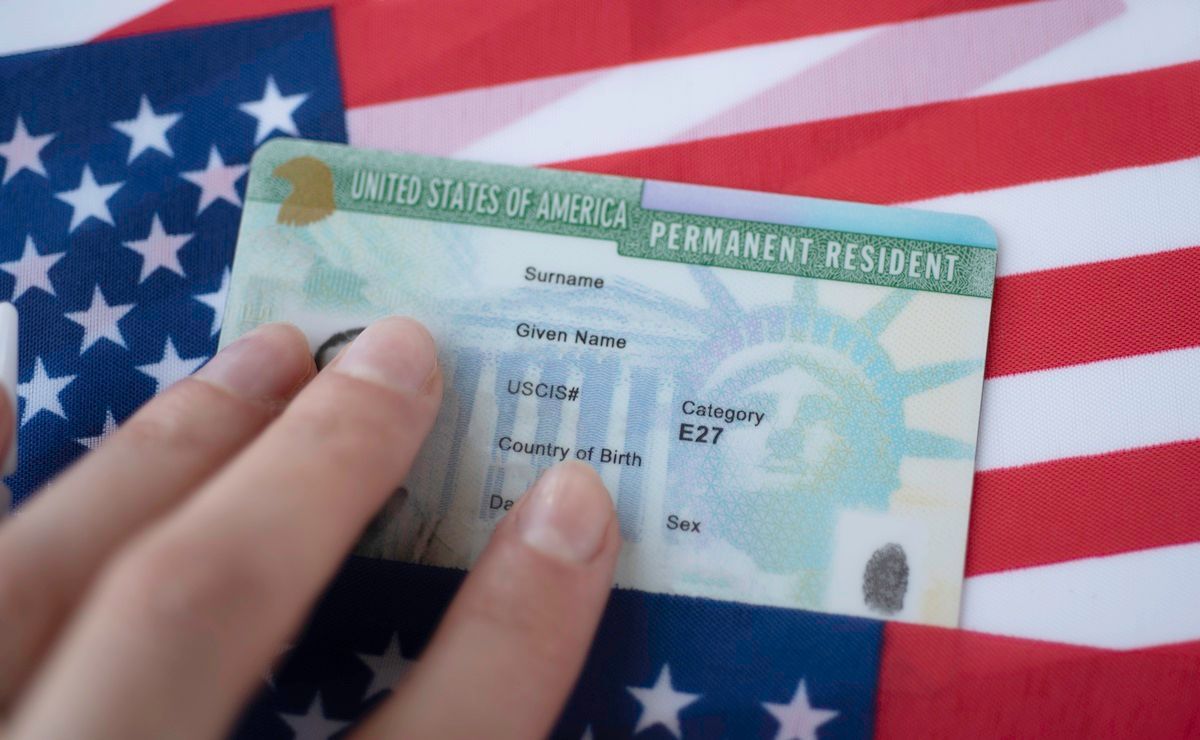
Receiving a two-year green card through marriage is an important step, but it leaves another process ahead: removing the conditions on permanent residence. For couples preparing a joint Form I-751 petition, understanding the filing window and organizing evidence early can make the preparation more manageable. The starting point is your own record. Locate the green card, the notice granting residence, and copies of the earlier immigration filing. Check the date conditional residence began and the card’s expiration date. Do not calculate the next deadline solely from your wedding anniversary or the date an attorney first submitted your case. Understand the joint filing window Under 8 CFR 216.4 , a joint I-751 petition generally must be filed during the 90-day period immediately before the second anniversary of obtaining conditional permanent residence. This is a window before that anniversary, not an additional 90 days after the card expires. Preparing early and filing early are different things. You can begin gathering records well before the window opens, while coordinating the correct submission date with your attorney. A joint petition also requires the appropriate signatures, fee, and supporting documentation. Confirm the current form instructions, accepted filing method, and applicable fee when the case is ready to submit. Build a record of the marriage over time The regulation identifies several types of evidence that may help show the marriage was not entered into to evade immigration law: jointly owned property, a lease for a shared home, combined financial resources, children’s birth certificates, and statements from people with personal knowledge of the relationship. These examples do not mean every couple must have a mortgage, joint accounts, or children. The evidence should accurately reflect your circumstances. A clear explanation of how you manage your household can be more useful than forcing your relationship into a checklist that does not fit. As a practical preparation step, organize records by date and type. Review whether they help explain the course of the marriage, rather than collecting only documents created shortly before filing. Flag separate addresses, name changes, or gaps in the records for your attorney. Never alter a document to make the history appear simpler. Tell your attorney if circumstances change This article addresses joint filing. Divorce, the death of a spouse, abuse, or other significant changes may require a different filing basis or an individualized assessment. Separate waiver provisions exist, with their own requirements. A spouse’s unwillingness to sign does not, by itself, establish eligibility for every waiver. Do not assume that the joint 90-day window answers every question about a non-joint case. If the relationship changes while preparing the petition or while it is pending, inform counsel promptly. You should not need to invent a continuing relationship to seek advice about the options that may actually apply. Keep tracking the case after submission The regulation provides that conditional resident status is automatically extended, when necessary, upon receipt of a properly filed I-751 until adjudication. Proof of that status is a separate practical matter: keep the receipt notice and have counsel review its wording before relying on it for travel or employment documentation. This article does not promise a particular receipt-extension period or processing time. A missed deadline calls for prompt legal attention. The regulation allows some late joint filings where USCIS accepts a written showing of good cause, but acceptance is not automatic. Do not assume a late petition cures the problem without further review. Santos Lloyd Law Firm, P.C. can help you assess the filing window, organize relevant evidence, and identify changes that may affect your I-751 strategy. Contact the firm early enough to review the facts before the deadline approaches.
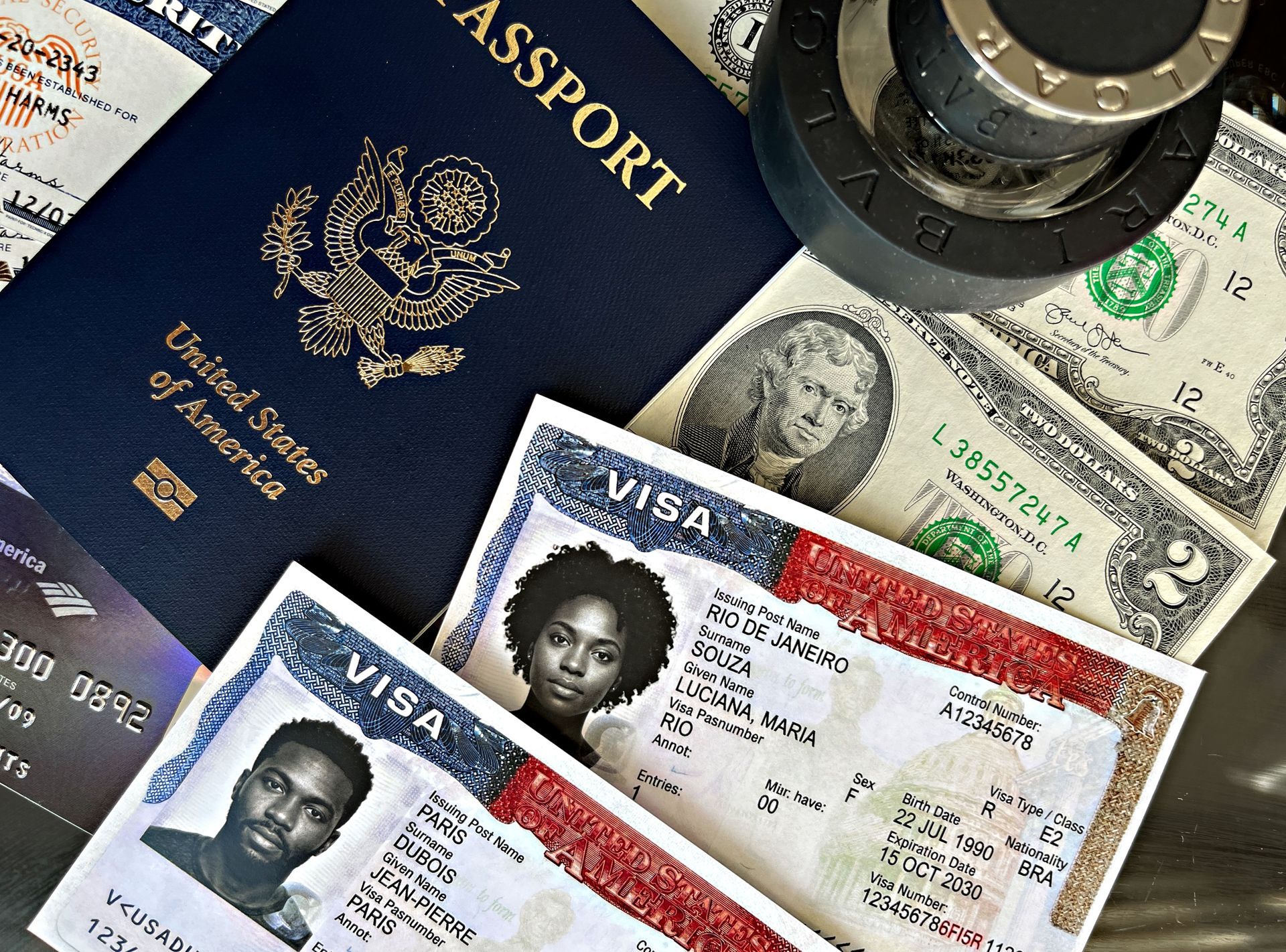
October begins a new federal fiscal year, but that does not mean every green card applicant moves to the front of the line. The Department of State’s October 2026 Visa Bulletin sets out the visa availability that applicants in family-sponsored and employment-based preference categories need to review this month.
Santos Lloyd Law Firm takes great pride in announcing that Partner Flavia Santos Lloyd has been invited to join the Fellows of the American Bar Foundation. As a highly selective global network, the organization recognizes legal professionals across both the public and private sectors who embody the absolute highest standards of the practice. Admission to this distinguished group highlights Flavia’s outstanding legal career, professional integrity, and deep impact on the legal community. Our team celebrates Flavia on this well-deserved recognition!
