Nouvelle urgente: la nouvelle règle de l'USCIS relative à la signature entrera en vigueur le 10 juillet 2026
Juliana LaMendola • June 25, 2026

 Click here to read this article in English


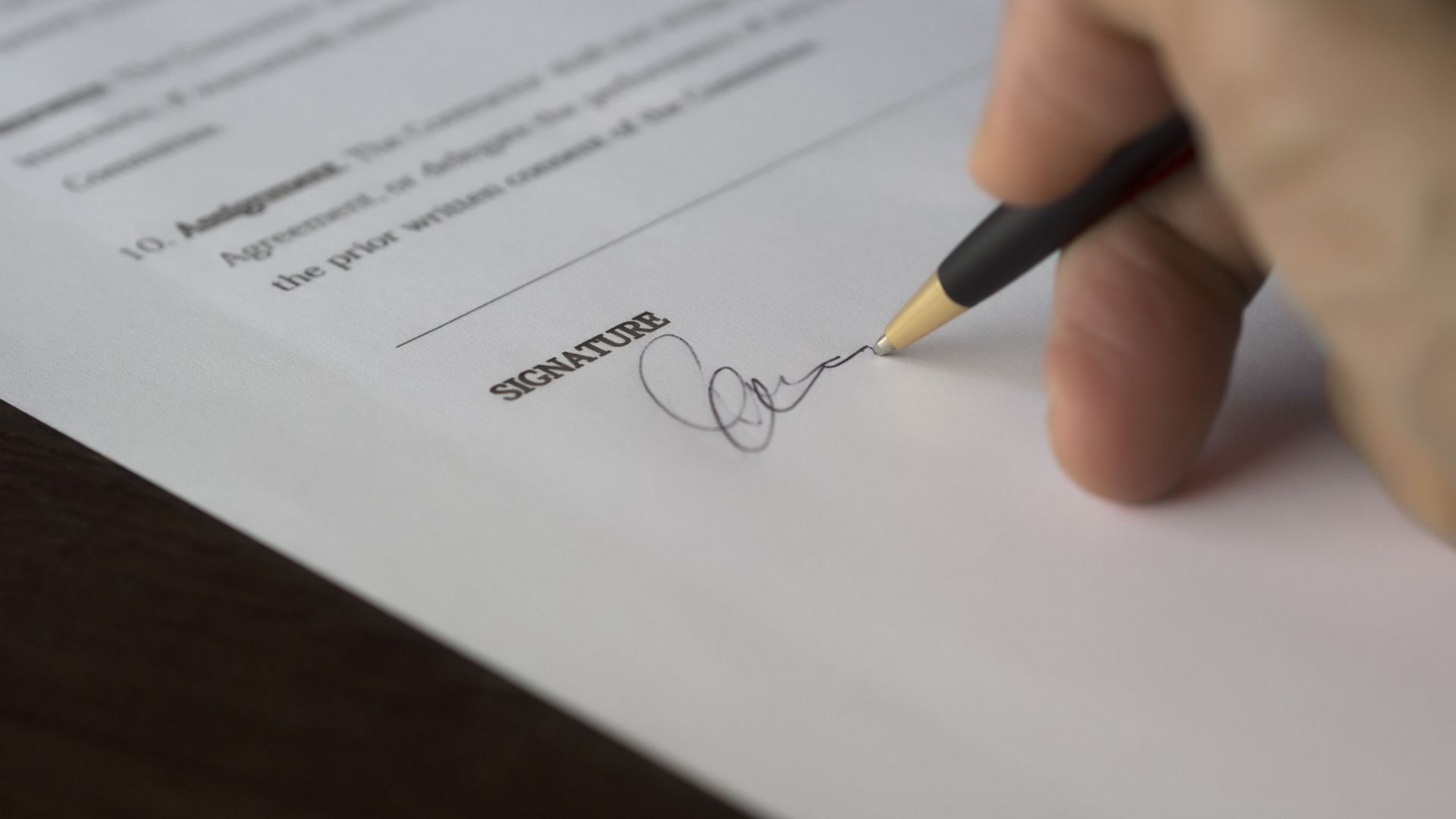
À compter du 10 juillet 2026, les Services de citoyenneté et d’immigration des États-Unis (USCIS) mettront en œuvre une nouvelle règle stricte concernant les signatures figurant sur les demandes de prestations d’immigration. Il est essentiel de prendre ce changement au sérieux, car les conséquences liées à la présentation d’une signature non valide sont graves et coûteuses.


En vertu de cette nouvelle règle, les agents de l’USCIS ont le pouvoir de rejeter votre dossier s’ils découvrent une signature non valide au cours de la procédure d’examen, même si votre demande avait déjà été acceptée et qu’un accusé de réception vous avait été délivré.


Si votre dossier est rejeté en raison d’un défaut de signature, l’USCIS ne vous permettra pas de corriger ou de « remédier » à cette erreur. Vous serez contraint de déposer une toute nouvelle demande et de payer de nouveaux frais de dossier, ce qui pourrait entraîner le non-respect des délais, un retard dans l’obtention de votre autorisation de travail, voire la perte de votre statut légal.


Les agents de l’USCIS peuvent utiliser des outils d’imagerie lors de l’examen des dossiers afin de comparer minutieusement les signatures figurant sur vos demandes précédentes, dans le but de détecter des incohérences ou des images de signatures copiées-collées. En vertu des nouvelles règles, l’USCIS considère strictement comme non valides plusieurs types de signatures, notamment les signatures générées par logiciel ou numériques, telles que celles créées par DocuSign, ainsi que les images de signatures copiées-collées ou insérées et réutilisées sur plusieurs formulaires. De plus, les noms apposés au tampon ou dactylographiés sont interdits, tout comme les signatures apposées par toute personne autre que le demandeur autorisé, telle qu’un avocat, un interprète ou un préparateur de dossier.


L’USCIS disposant désormais d’un pouvoir élargi lui permettant de rejeter purement et simplement les dossiers et de conserver les frais de dépôt en cas de défauts de signature, il est vivement recommandé d’adopter la pratique consistant à utiliser des signatures à l’encre humide non seulement pour les formulaires de l’USCIS, mais aussi pour tous les documents joints à votre demande, tels que les lettres de recommandation ou les déclarations personnelles.


Ainsi, toute demande que vous déposerez prochainement auprès de l’USCIS devra comporter des signatures originales, manuscrites et à l’encre humide. Bien que l’USCIS vous autorise à soumettre une version numérisée, photocopiée ou faxée de votre demande, la copie que vous téléchargez ou envoyez par courrier doit provenir d’un document qui a été physiquement signé à l’encre.


Vérifiez vos pratiques en matière de signature avant la date de mise en œuvre du 10 juillet 2026 afin de préserver vos frais de dossier et de vous assurer que votre dossier d’immigration reste sur la bonne voie.

Ce blog n'est pas destiné à fournir des conseils juridiques et rien ici ne doit être interprété comme établissant une relation avocat-client. Veuillez prendre rendez-vous avec un avocat spécialisé en droit de l'immigration avant d'agir sur la base de toute information lue ici.
Juliana LaMendola


By Juliana LaMendola June 25, 2026
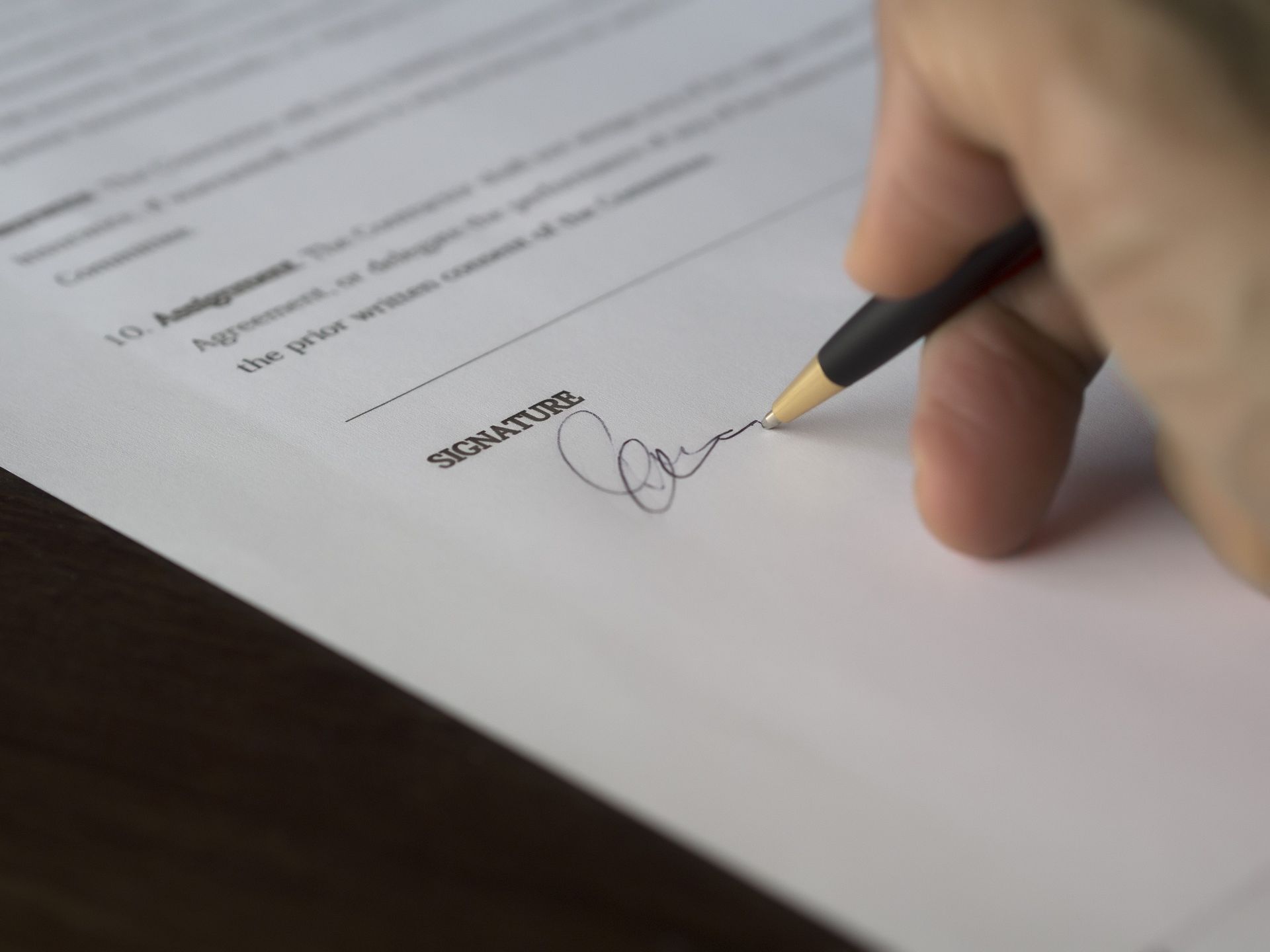
 Starting July 10, 2026, U.S. Citizenship and Immigration Services (USCIS) is implementing a strict new rule regarding signatures on immigration benefit requests. Taking this change seriously is crucial, as the consequences for submitting an invalid signature are severe and costly. Under the new rule, USCIS officers have the authority to deny your filing if they discover an invalid signature during the adjudication process, even if your application was already accepted and you were issued a receipt notice. If your case is denied for a signature defect, USCIS will not allow you to fix or "cure" the mistake. You will be forced to submit an entirely new petition and pay a new filing fee, which could result in missed deadlines, delayed work authorization, or even the loss of your legal status. USCIS officers may use imaging tools during adjudication to closely compare signatures across your previous filings to detect inconsistencies or copy-and-pasted images of signatures. Under the new rules, USCIS strictly considers several types of signatures to be invalid, including software-generated or digital signatures, such as those created by DocuSign, as well as copy-and-pasted or inserted images of signatures reused across multiple forms. Furthermore, stamped or typewritten names are prohibited, along with any signatures executed by anyone other than the authorized requestor, such as an attorney, interpreter, or preparer. Because USCIS now has expanded authority to outright deny cases and keep filing fees over signature defects, it is highly recommended that you adopt a practice of using wet-ink signatures for not just USCIS forms, but all documents submitted in your petition such as recommendation letters or personal statements. Thus, any upcoming petition you are filing with USCIS must include original, handwritten, “wet-ink” signatures. While USCIS does allow you to submit a scanned, photocopied, or faxed version of your application, the copy you upload or mail must be of a document that was physically signed in wet ink. Audit your signature practices before the July 10, 2026, implementation date to protect your filing fees and ensure your immigration case stays safely on track.
By Kris Quadros-Ragar June 18, 2026
Navigating U.S. immigration law can often feel like learning a completely new language. Two terms that frequently confuse are lawful status and a period of authorized stay. While they sound similar and both relate to your ability to remain in the United States, they are distinct legal concepts. Understanding the difference is critical. Mixing them up can accidentally lead to visa violations, unlawful presence, and severe long-term immigration consequences. 1. What is Lawful Status? Lawful status means you have been officially granted the right to be in the United States by the U.S. government, and that right is currently active. You hold a lawful status if you are: A U.S. citizen or national. A Lawful Permanent Resident (Green Card holder) or Conditional Permanent Resident. A nonimmigrant who was lawfully admitted to the country for a temporary period (such as on a tourist, student, or work visa). For temporary visa holders, your lawful status is directly tied to your Form I-94 (Arrival/Departure Record). As long as the date on your I-94 has not passed, and you are actively following the rules of your visa - such as maintaining a full course load on an F-1 student visa or working only for your approved sponsor on an H-1B visa - you are in lawful status. 2. What is a Period of Authorized Stay? A period of authorized stay is essentially a temporary legal buffer. It means the government allows you to physically remain in the country for the time being, but you do not hold an active, lawful status. The most common way to enter this buffer zone is by filing to extend, change, or adjust your visa status before your current permission expires. While you wait for USCIS to make a decision, your Form I-94 expiration date will often pass. At that exact moment, your active lawful status officially ends. However, because you submitted your application on time, you automatically enter a period of authorized stay for as long as your case remains pending. It is important to note that, while this authorized stay stops you from accruing unlawful presence (the dangerous clock that triggers multi-year reentry bars), it does not grant you a formal legal status, nor does it completely shield you from the initiation of removal (deportation) proceedings. It functions as a temporary stay, not a permanent safety net. If USCIS denies your application and your original visa has already expired, your temporary buffer zone vanishes instantly. The consequences are immediate and serious: since you no longer hold a valid status or a pending case, you no longer have legal permission to be in the country, giving the government the right to start removal proceedings. To avoid these highly stressful risks, the safest strategy is to maintain a valid underlying status when possible. If you are currently waiting on a pending application or have questions about your options, our office is here to help you navigate the system safely. Reach out to us today to schedule a consultation.
By Joseph Lennarz June 4, 2026
Navigating the immigration landscape as a professional athlete can feel as demanding as a championship final, but understanding the P-1A visa can help you to plan ahead and successfully petition USCIS when the time comes to apply. For individual athletes like surfers, Rodeo cowboys, or Brazilian Jiu-Jitsu fighters, the P-1A serves as the primary gateway to competing in the United States. While it is often compared to the O-1 visa, the P-1A has a distinct threshold that is more easily accessible than the O-1; rather than proving "extraordinary ability," you must demonstrate "international recognition". This means your achievements must be renowned or leading in more than one country, showcasing a level of skill that is substantially above the ordinary. For those competing in individual sports, the spotlight is entirely on your personal accolades and standing rather than a team or league’s reputation as in the case of a team sport athlete. You must show that you are personally well-known within your sport across multiple countries, and that the U.S. events you intend to enter typically draw other internationally recognized participants. One of the most significant advantages for the solo competitor is the duration of stay, as individual athletes can often secure a P-1 visa for an initial period of up to five years, which can eventually be extended to a total of ten. This stands in stark contrast to team athletes, who are generally limited to the duration of a specific season or contract with a team. If you are looking to be proactive about your future eligibility, you should treat your career milestones as a collection of evidence for the "Two-Out-of-Seven" rule used by USCIS. To qualify, you must provide evidence satisfying at least two of the following seven criteria: Evidence of having participated to a significant extent in a prior season with a major U.S. sports league. Evidence of participation in an international competition with a national team. Evidence of having participated to a significant extent in a prior season for a U.S. college or university in intercollegiate competition. A written statement from an official of a major U.S. sports league or the governing body of the sport detailing your international recognition. A written statement from a member of the sports media or a recognized expert. Evidence that you or your team is ranked, if the sport has international rankings. Evidence that you or your team has received a significant honor or award in the sport. Building your resume with these specific benchmarks in mind is essential. Here are some suggestions to help an individual sport athlete to meet these criteria and successfully qualify for a P-1A visa: First, you should actively seek opportunities to represent your national team or strive for high international rankings , as these are concrete proof of your standing. If you are working with an immigration attorney, make sure they have a clear understanding of your sport, how its governing body determines rankings, and the significance of your accomplishments- successfully showing USCIS why your rankings or results indicate you are performing at an elite and internationally recognized level is key to a successful outcome. Beyond the trophies, your professional network plays a crucial role ; cultivating relationships with recognized experts or sports media members who can provide written statements will significantly strengthen your future petition. Major media articles that discuss your accomplishments or explain the significance of competitions or rankings you feature in, can also have a strong positive impact on your case. As you prepare, remember that every petition also requires a formal consultation letter from an appropriate labor organization , if one exists that covers your sport. A good immigration attorney will help you to identify the appropriate labor organization and engage with them on your behalf to secure the consultation letter you need. Generally, they will want to see the same evidence that USCIS will be evaluating, and they may need some time to review your petition prior to issuing you a consultation letter. Finally, you will also need a written contract with an employer or agent within the United States, and a detailed itinerary of the events where you will perform . Your immigration attorney can also help you to structure your contract with your agent or employer, and guide you in creating an itinerary based on the events or competitions you will participate in. While every individual sport is different, USCIS will want to see that you have set up a structure that will pay you a living wage to perform your sport, and that you have planned out an itinerary of competitions or events in sufficient detail that covers the entire period of time for which you are requesting the P-1A visa. At Santos Lloyd Law Firm, P.C., we are experienced in helping talented individuals who are accomplished in many different sports to continue their careers here in the United States. If you are such an athlete interested in competing here, please contact us, and we will be happy to discuss your case.
Show More